10 Common Mistakes Beginners Make When Learning Piano (And How to Avoid Them)
Starting your piano journey is exciting, but it's also easy to develop habits that can hinder your progress or even cause injury. After years of teaching and observing countless beginners, I've identified the most common mistakes that hold new players back—and more importantly, how to fix them.

The good news? Most of these mistakes are completely avoidable with the right awareness and guidance. Whether you're self-teaching or working with an instructor, understanding these pitfalls will save you months of frustration and help you build a solid musical foundation from day one.
1. Poor Posture at the Piano
The Mistake:
Many beginners slouch, sit too close or too far from the keys, or position themselves at the wrong height. This leads to back pain, shoulder tension, and limited technical ability.
The Fix:
Sit at the center of the keyboard with your feet flat on the floor. Your elbows should be slightly higher than the keys, forming a downward slope from elbow to wrist. Keep your back straight but relaxed, and sit on the front half of the bench to maintain engagement. Your forearms should be roughly parallel to the floor.
Why It Matters:
Proper posture isn't just about comfort—it's foundational to technique. Poor positioning limits your reach, reduces power, and makes fast passages nearly impossible to execute cleanly.
2. Incorrect Hand Position and Tension
The Mistake:
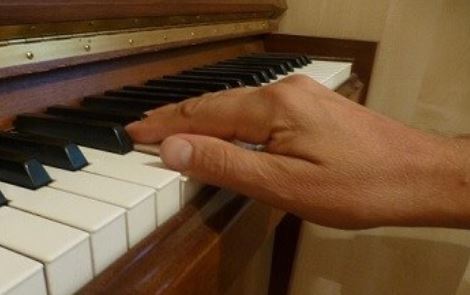
Flat fingers, collapsed knuckles, or excessive tension in the hands and wrists. Some beginners grip the keys like they're holding on for dear life, while others let their hands go completely limp.
The Fix:
Imagine holding a small ball in each hand—this creates the natural curve you want. Your fingertips should strike the keys at a slight angle, and your knuckles should remain the highest point of your hand. Keep your wrists level with your hands, not drooping or raised. Most importantly, stay relaxed. If you feel tension creeping into your shoulders or forearms, stop and shake it out.

Practice This:
Place your hands gently on the keys and press down slowly, paying attention to any tension. Your fingers should feel firm but flexible, not rigid.
3. Rushing Through the Basics
The Mistake:
The urge to jump straight into complex songs is strong, but skipping fundamentals like finger exercises, scales, and simple melodies creates gaps in your foundation that become harder to fill later.
The Fix:
Embrace the learning process. Spend your first few weeks mastering hand position, finger independence, and basic rhythm. Learn simple songs that reinforce these fundamentals rather than impressive pieces that are beyond your current level. Tools like Melodease.com offer structured progression that keeps beginners from advancing too quickly—their free platform guides you through basics with popular songs that actually sound good, making fundamentals less tedious.
Remember:
Every professional pianist started with "Twinkle Twinkle Little Star." There are no shortcuts to solid technique.
4. Ignoring Rhythm and Timing
The Mistake:
Focusing solely on hitting the right notes while completely disregarding tempo, rhythm, and timing. This creates performances that technically have the correct notes but sound choppy and unmusical.
The Fix:
Always practice with a metronome, even for simple exercises. Start slower than you think you need to and gradually increase speed. Count out loud during practice: "1-and-2-and-3-and-4-and." This internalizes rhythm in a way that silent practice never will.

Bonus Tip:
Before playing a piece, listen to a recording to understand its natural flow and phrasing. Rhythm is just as important as the notes themselves.
5. Practicing Only the Fun Parts
The Mistake:
Playing through your favorite sections repeatedly while avoiding challenging passages. This creates uneven skill development and pieces that sound great in some spots but fall apart in others.
The Fix:
Identify your weakest measures and dedicate extra time to them. Break difficult sections into tiny chunks—even just two or three notes—and practice them slowly until they become automatic. Use the "three times perfectly" rule: don't move on until you can play the section correctly three consecutive times.
Mental Shift:
View challenging passages as puzzles to solve, not obstacles to avoid. The satisfaction of conquering a difficult section far exceeds repeatedly playing what you already know.
6. Playing Without Expression or Dynamics
The Mistake:
Treating every note with the same volume and intensity, resulting in robotic, lifeless performances. Many beginners see dynamics markings (p, f, crescendo) as optional suggestions rather than essential elements.
The Fix:
Even in your earliest pieces, practice playing some notes softer and others louder. Experiment with gradual volume changes. Pay attention to phrasing—where musical sentences begin and end—and shape your playing accordingly. Think of dynamics as the emotional language of music.
Start Simple:
Try playing a simple scale where each note grows progressively louder, then progressively softer. This trains your control over touch and expression.
7. Neglecting Music Theory
The Mistake:
Viewing theory as boring or unnecessary, focusing exclusively on memorizing finger patterns without understanding what you're actually playing. This limits your ability to learn new pieces, improvise, or understand music deeply.
The Fix:
Learn theory gradually alongside practical playing. Understand the chords you're playing, recognize patterns like scales and arpeggios, and know basic key signatures. You don't need to become a theory expert overnight—even understanding the difference between major and minor keys enriches your playing significantly.
Practical Application:
When learning a song, identify the key and main chord progression. This context makes pieces easier to memorize and helps you spot patterns across different songs.
8. Inconsistent Practice Schedules
The Mistake:
Practicing for three hours one day, then skipping the next four days, or only practicing when you "feel inspired." Piano skills develop through consistent repetition, not sporadic marathon sessions.
The Fix:
Commit to 15-30 minutes daily rather than occasional long sessions. Your brain and muscles need regular reinforcement to build neural pathways and muscle memory. Even five focused minutes is better than nothing.
Build the Habit:
Schedule practice at the same time each day. Morning practice, before other distractions arise, works well for many people. Use apps or platforms that track daily streaks to maintain motivation.
9. Not Using Both Hands Independently Early Enough
The Mistake:
Spending too long playing melodies with only the right hand, putting off the challenge of coordinating both hands. This makes the eventual transition unnecessarily difficult.
The Fix:
Start simple hands-together exercises within your first few weeks. Begin with pieces where one hand holds a single note or simple pattern while the other hand moves. Gradually progress to independent melodies in each hand.
Practice Strategy:
When learning a new piece, practice each hand separately until comfortable, then combine them at a slower tempo. Don't expect immediate coordination—it's a skill that develops with patient repetition.
10. Learning in Isolation Without Feedback
The Mistake:
Never seeking input on your playing, whether from a teacher, experienced player, or even recording yourself. Without external feedback, you can't identify problems you're not aware of.
The Fix:
Record yourself regularly and listen critically. You'll hear things you miss while playing. If possible, get occasional feedback from someone more experienced, even if you're primarily self-taught. Online communities and forums can provide valuable insights.
Modern Solutions:
Some apps offer feedback on timing and accuracy, which helps bridge the gap for self-learners. While platforms like Melodease.com are completely free and great for structured learning, combining digital tools with occasional human feedback creates the most well-rounded learning experience.
Bonus Tip: Celebrate Progress, Not Perfection
The biggest meta-mistake beginners make is expecting too much too soon and becoming discouraged. Piano mastery takes years, but enjoyment can start immediately. Celebrate small victories: your first scale played smoothly, your first song memorized, your first time both hands coordinated perfectly.
Set realistic short-term goals alongside your long-term aspirations. Learning piano is a marathon, not a sprint, and every professional pianist you admire started exactly where you are now—as a beginner making these same mistakes.
Moving Forward With Confidence
Awareness is half the battle. Now that you know what to watch for, you can build proper habits from the start rather than spending months unlearning bad ones. Focus on one or two areas at a time rather than trying to perfect everything immediately.
Remember: mistakes are part of the learning process. What matters is recognizing them, adjusting your approach, and maintaining the consistency and patience that piano playing demands. With mindful practice and attention to these fundamentals, you'll build a strong foundation that supports years of musical growth and enjoyment.
Keep your fingers curved, your practice consistent, and your expectations realistic—and most importantly, have fun making music.