Amadeus Lied to You About Nearly Everything, and Honestly, Good for It
Let's start with the important bit: Amadeus rules. Eight Oscars. That scene where Salieri reads the manuscripts and starts shaking. The giggle. It's the reason half the people reading this ever heard a Mozart piece on purpose.
It is also, historically speaking, absolute nonsense from roughly minute four onwards.
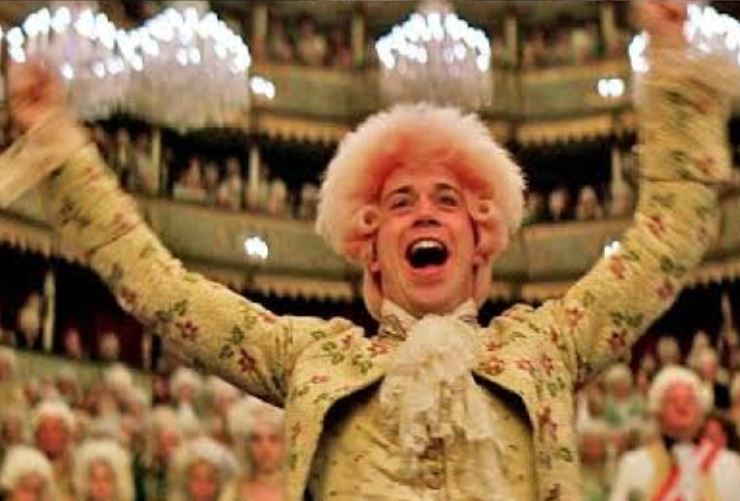
Peter Shaffer, who wrote it, never pretended otherwise. He called it "a fantasia on a theme" and based it on a Pushkin play from 1830 that was itself made up. The problem is that nobody reads the fine print on a film called Amadeus starring a man playing Mozart. So a couple of generations of us absorbed a revenge fantasy as basically true.
Here are the five biggest whoppers, in ascending order of how badly they did someone dirty.
1. Mozart's Giggle
Let's get the easy one out of the way.
That laugh. The one that sounds like a donkey being tickled. Tom Hulce reportedly based it on descriptions of Mozart having an "infectious" laugh, and then took a running jump past that into something that makes you want to leave the room.
There is no historical record of Mozart's laugh. None. Nobody wrote it down. Some poor unnamed 18th-century person described it as infectious and Hulce ran with it so hard that millions of people now genuinely believe one of the greatest composers who ever lived sounded like a squeaky gate.
To be fair to the film, it's a fantastic character choice. To be fair to Mozart, he probably just laughed like a guy.
2. Mozart Died Broke and Got Dumped in a Pauper's Grave
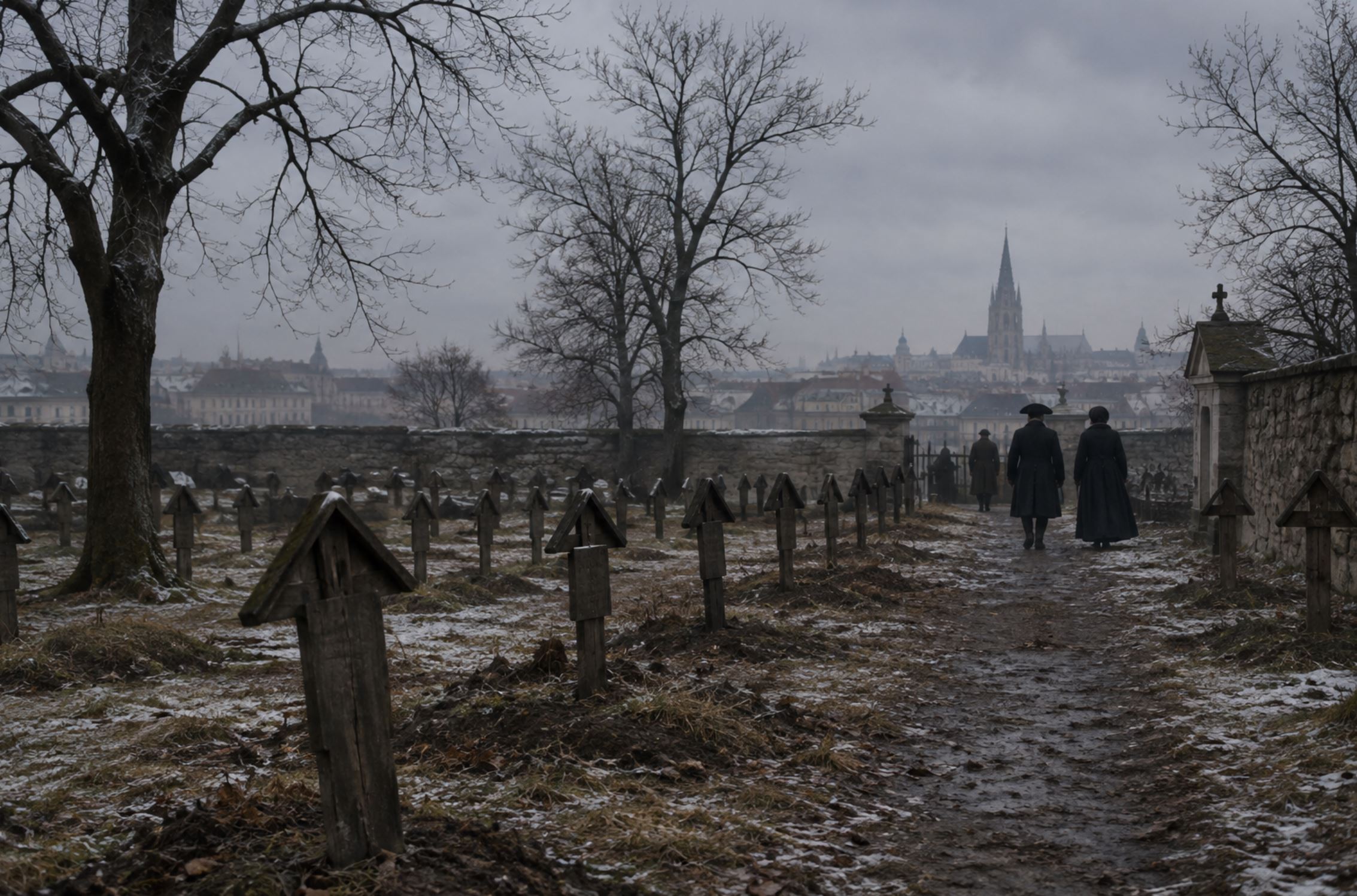
The film's ending is devastating: a canvas sack, a cart, driving rain, a mass grave, a shovel of lime thrown on top, nobody there. Gets you every time.
It's also wrong in almost every particular.
Mozart was buried in a common grave, which is not the same thing as a pauper's grave and is a distinction the film cheerfully steamrolls. Emperor Joseph II had pushed through burial reforms designed to be efficient and hygienic, and this was simply what ordinary Viennese people got. It wasn't a mark of destitution. It was the standard package.
He also wasn't broke. He'd had a rough couple of years, and he owed money, but in 1791 he was earning well and things were looking up. He'd just premiered The Magic Flute, which was a hit.
Oh, and the weather. The storm is such a good bit of cinema. The actual day was reported as mild.
3. The Deathbed Dictation Scene
This is the best scene in the film and it never happened.
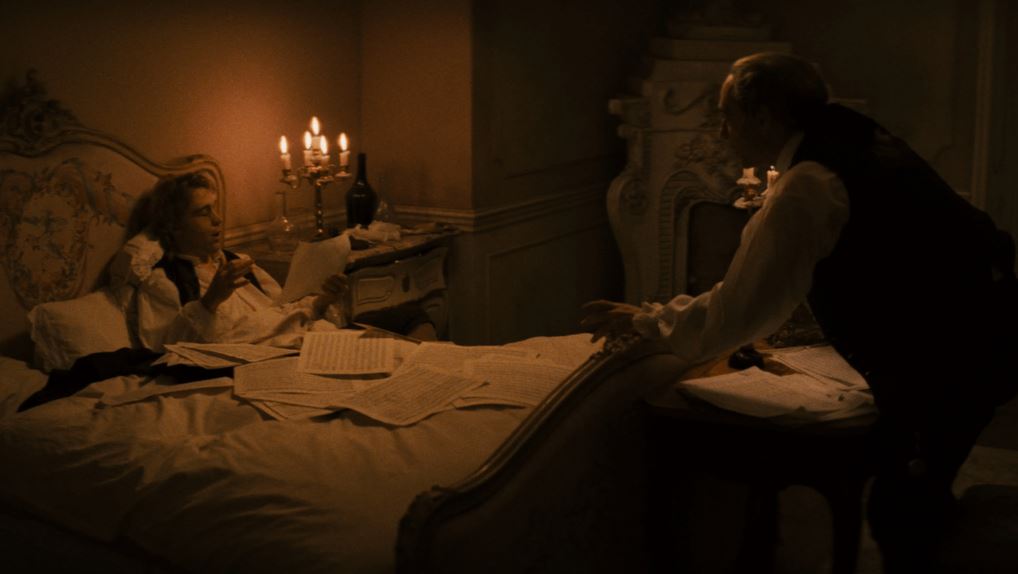
Salieri sitting at the bedside, scribbling frantically as a dying Mozart dictates the Confutatis, the two of them locked in this horrible intimate collaboration. It's extraordinary filmmaking. It's also a complete invention.
The man who actually finished the Requiem was Franz Xaver Süssmayr, Mozart's pupil, who was probably at the bedside and definitely got instructions on how to complete it. Constanze, Mozart's widow, was frantic — she'd been paid for a commission that wasn't done, and she needed it finished or the money evaporated.
She went through a few composers first. Joseph Eybler had a crack at it and gave up. Franz Jakob Freystädtler tried. Eventually it landed on Süssmayr, who rewrote the whole score in his own hand, forged Mozart's handwriting, and dated it 1792, which is a slightly hilarious thing to do given Mozart was extremely dead by then.
There's a nice detail the film misses. On the night he died, Mozart reportedly sang through parts of the Requiem with friends, taking the alto line himself, and got as far as the Lacrimosa before he put the score down and cried.
That's a better scene than the one they filmed, frankly. Nobody had to invent anything.
4. Katerina Cavalieri
Small one, but it's funny.
In the film, Salieri is tortured by the idea that his beloved student Katerina Cavalieri has slept with Mozart, and he piously insists he himself has never laid a finger on her, because he's made a vow of chastity to God.
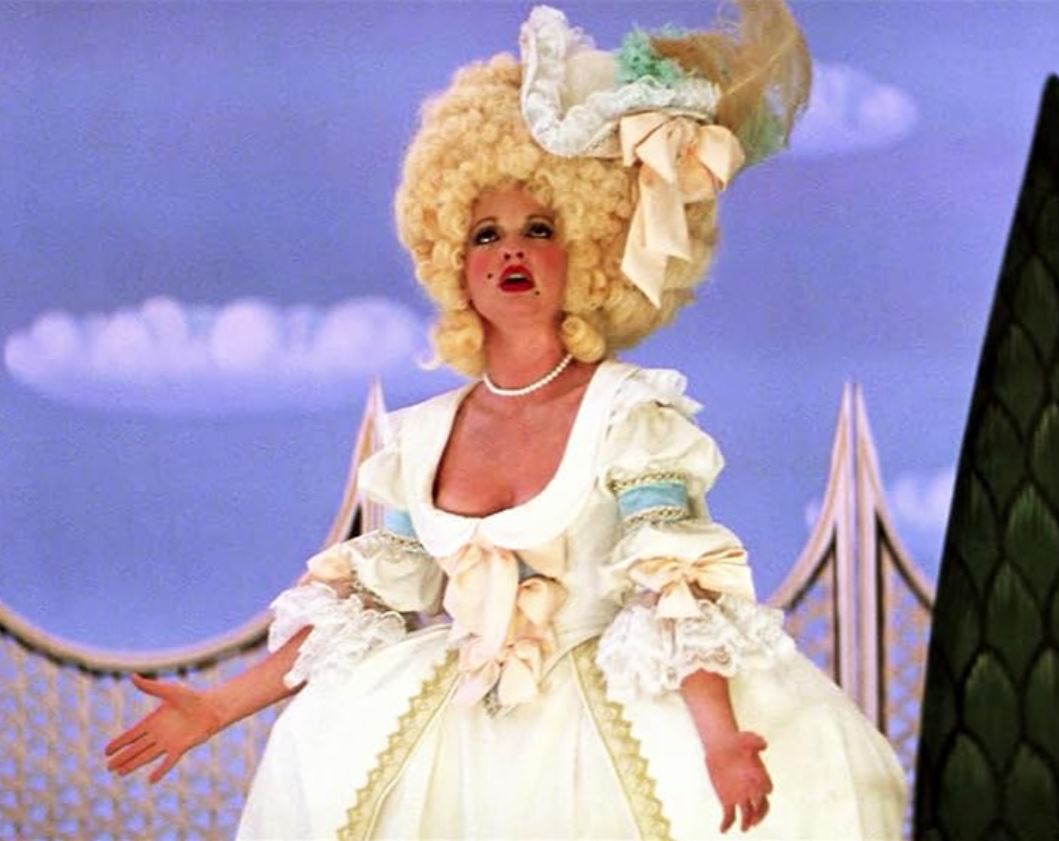
Reality: she was Salieri's mistress. Openly. Not even slightly a secret. They shared a box at a performance of The Magic Flute, which is about as subtle as taking out a newspaper ad.
Meanwhile the Mozart affair almost certainly didn't happen. The year before, Mozart had written to his father that he'd never had "relations of that sort" with any woman. He was, by the standards of 18th-century Vienna, a bit of a square about this stuff.
So the film has it exactly backwards, and then gives Salieri a chastity vow on top. The man's ghost deserves compensation.
5. Salieri Was a Bitter Mediocrity Who Hated Mozart
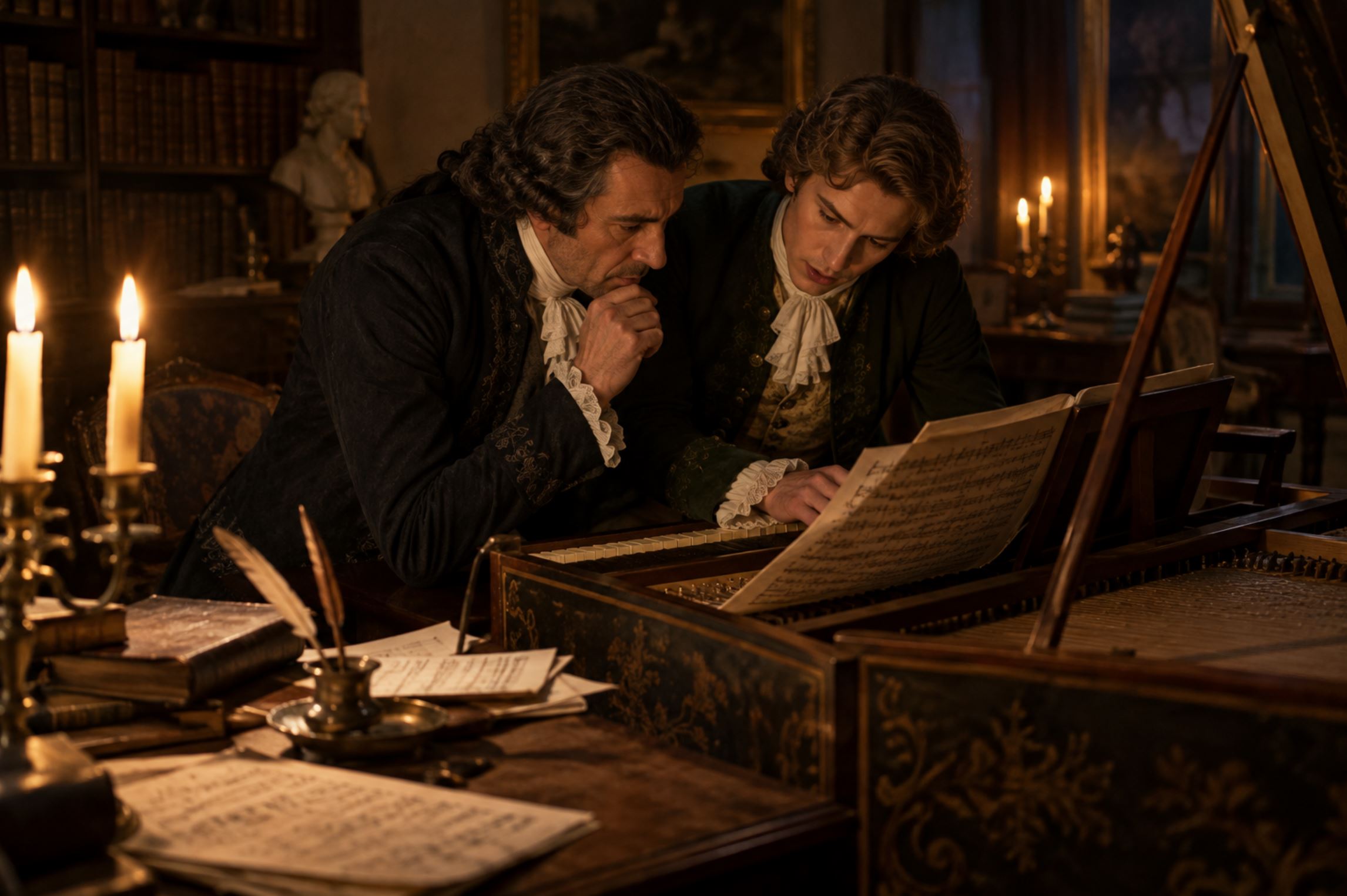
Here we go. The big one. The lie that ate a man's reputation.
Antonio Salieri was not a mediocrity. He was the imperial court composer in Vienna, one of the most influential musicians in Europe, and enormously successful in his lifetime. He got there because Emperor Joseph II heard his music and kept inviting him back, not through scheming.
He was not Mozart's enemy. They were competitors, sure, in the way two senior people in the same industry are always a bit competitive. But they were cordial. Not close friends. Not bitter rivals either. Just two guys in the same line of work.
Here's the detail that really kills the film's premise. In 2015, archivists turned up a cantata that Mozart and Salieri wrote together — Per la ricuperata salute di Ofelia, a joint commission from 1785, right in the middle of the period when the film has Salieri plotting Mozart's destruction. They collaborated. It exists. You can listen to it.
And then the genuinely lovely part. After Mozart died, his younger son Franz Xaver — the baby, five months old when his father died — needed a musical education.
One of his teachers was Antonio Salieri.
The man the film spends three hours painting as Mozart's murderer taught Mozart's son. He also taught Beethoven, Schubert and Liszt. His actual legacy is that he trained half the next century of European music, and for the last forty years he's been known worldwide as a jealous poisoner because of a movie.
So Did Anyone Poison Anyone?
No. Mozart most likely died of something like chronic kidney failure. He was 35, he'd been unwell, and 18th-century medicine was 18th-century medicine.
The poisoning rumour did exist — it swirled around Vienna for decades, and an elderly Salieri, unwell and confused near the end of his life, was reportedly tormented by it. Which is grim, and makes what the film did to him a bit less forgivable, because Shaffer didn't invent the smear. He just gave it the best PR campaign in cinema history.
And Yet
Watch it anyway.
I'm serious. It's a magnificent film, and the thing it's actually about — mediocrity staring at genius and having a complete breakdown over the unfairness of it — is a real and universal feeling that has nothing to do with whether the historical Salieri had it. Everyone who has ever practised scales for two hours and then heard a fourteen-year-old play Chopin knows exactly what that scene with the manuscripts is doing.
Just hold it at arm's length. It's a film about jealousy that happens to use real people's names, roughly the way a painting uses a model. The model doesn't look like that. The painting is still good.
And if you take one fact away from this, make it the nice one. The bitter enemy who murdered Mozart spent part of his later career teaching Mozart's orphaned son how to write music, for free, out of what seems to have been plain decency.
Someone should make a film about that guy.