How to Play 'Someone You Loved' by Lewis Capaldi on Piano
Melodease is our own piano learning tool, so weigh our enthusiasm accordingly. Everything below works just as well with printed sheet music and a metronome.
Key (sheet music): C major · Key (recording): D♭ major · Time signature: 4/4 · Tempo: 110 BPM · Chords: C, G, Am, F, Dm
This is one of the best beginner songs there is. Four main chords, all on white keys in the published arrangement, a moderate tempo, and a structure that repeats enough that you learn less than you think.
There's one catch, and it's the thing nobody mentions. More on that below.
Play it now
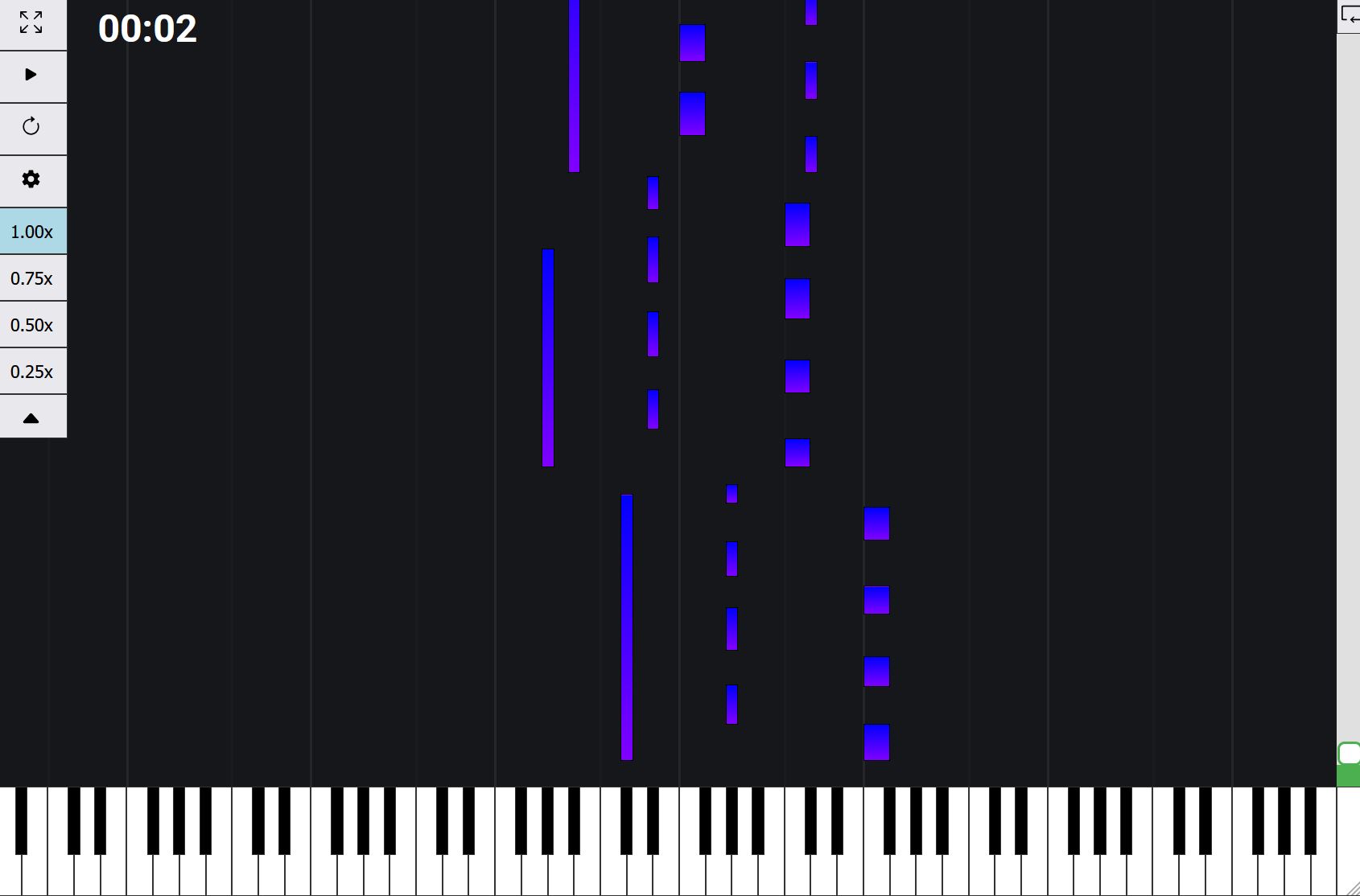
One click and you're playing
The arrangement is already loaded. No search, no setup, no choosing a difficulty level first.
- Slow it to 50% and the four-chord loop settles quickly
- Loop the chorus separately, which is where the Dm appears
- Right hand, then left, then both — the app tracks where you are
- Switch on half view when a bar won't make sense
Free account, no card. Takes about ten seconds.
The rest of this covers the chords, the progression it's built on, and the key problem that'll confuse you the first time you try to play along.
The Semitone Problem
Worth knowing before you spend money on sheet music.
The record is in D♭ major. Wikipedia gives the key signature as D♭, and every streaming analysis tool reports C♯ or D♭, which are the same thing written differently.
The published piano sheet music is in C major. Musicnotes' official easy piano edition is in C, transposed down a semitone from the original, presumably because five flats is a brutal place to put a beginner arrangement.
What this means practically: if you learn from the sheet music and then put the record on, you'll be a semitone flat and it'll sound wrong. Not slightly wrong — unmistakably, teeth-grindingly wrong.
Three options:
- Learn it in C and don't play along with the record. Fine for playing alone.
- Learn it in C and use the transpose button on your keyboard to shift up one semitone when you want to play along.
- Learn it in D♭ directly, which means five flats and is not a beginner proposition.
Most people should take the first or second. The transpose button exists for exactly this, and this is one of the clearest cases for using it.
The Chords
In the C major arrangement, five chords, four of which do nearly all the work.
- C major — C, E, G
- G major — G, B, D
- A minor — A, C, E
- F major — F, A, C
- D minor — D, F, A
Every single one is a three-note triad on white keys. No sharps, no flats, nothing awkward under the hand.
And the main loop is C–G–Am–F. In functional terms that's I–V–vi–IV, which is the most-used chord progression in modern pop music by a very wide margin. Learn it here and you've learned the skeleton of several hundred other songs.
The D minor appears less often and gives the harmony its one moment of extra colour. Don't substitute it.
What Makes It Good for Beginners
It repeats heavily. The song runs about three minutes and recycles a small amount of material. Once you have the verse and the chorus, you have essentially the whole thing.
The tempo is forgiving. 110 BPM, marked Moderate Ballad. Quick enough to have momentum, slow enough to think.
It's piano-led by design. Capaldi plays the piano on the record and has said his best songs come from sitting at one and bashing my head against a brick wall
until a melody arrives. The arrangement isn't a guitar part transcribed — the piano is the song, which means a solo piano version sounds complete rather than thin.
The left hand is simple. Held chords or gentle broken patterns underneath a melody. No complicated accompaniment figure to fight while learning the tune.
Where It Gets Harder
Dynamics. The verses are restrained and the choruses open up. Play it all at one level and it becomes a chord exercise. This is where touch-sensitive keys genuinely matter — on unweighted keys you physically can't shape it, as the best keyboards under $300 covers.
The vocal phrasing. The melody doesn't sit squarely on the beat. If you're playing the vocal line in your right hand, you need to let it breathe rather than quantising it to the metronome.
Pedalling. Four chords changing regularly means frequent pedal changes. Hold through a change and the harmony muddies immediately.
Practice Order
Week 1 — the four chords. C, G, Am, F in a loop, right hand only. All white keys, so this should come quickly. Add Dm at the end of the week.
Week 2 — hands together on the verse. Left hand holding bass notes, right hand playing the melody. Half speed.
Week 3 — the chorus and dynamics. Join it up and work on the volume shape. This is the week that turns the notes into the song.
Realistic timeline: two to three weeks at fifteen minutes a day. One of the faster wins on this site, and a good choice if you want a confidence piece.
Common Mistakes
Playing along with the record after learning it in C. The semitone thing. Transpose up one or play alone.
Flat dynamics. The single biggest one on any ballad.
Rushing the melody. The vocal line is conversational. Playing it metronomically removes the thing that makes it moving.
Skipping the D minor. It's the one chord that isn't part of the standard four, and it's there for a reason.
Over-pedalling. Change on every chord. Four chords on a loop means a lot of changes.
Where to Get the Sheet Music
Copyrighted, so no legal free PDF. The official editions come through Musicnotes and similar retailers for a few dollars.
- Easy piano — C major, 4/4, marked Moderate Ballad at 110 BPM, also available transposed to B♭ major
- Piano/vocal/chords — fuller arrangement with the vocal line separated out
Take the easy edition. It's in C, it's complete, and the full arrangement adds very little for a solo pianist.
A Few Things About the Song
It was a slow burn in America. The song came out in 2018 and topped the UK chart in March 2019, where it stayed for seven weeks. In the US it took until its twenty-fourth week on the Billboard Hot 100 to reach number one — a genuine sleeper hit.
It was the UK's bestselling single of 2019, and by May 2020 it had become the longest-running top ten UK single of all time by a British artist.
It charted in 29 countries, which for a piano ballad by a then-unknown Scottish singer-songwriter is a remarkable run.
Common Questions
What key is Someone You Loved in? The recording is in D♭ major. The published piano sheet music is in C major, transposed down a semitone to keep it playable. Both answers are correct depending on which you mean.
What are the chords? C, G, Am and F in the C major arrangement, with a Dm appearing in places. That main four is the I–V–vi–IV progression.
Is it good for beginners? One of the best. All white keys, five triads, moderate tempo, heavy repetition. The hard part is dynamics rather than notes.
How long will it take? Two to three weeks at fifteen minutes a day. See how long it takes to learn piano for the wider picture.
Can I play it on 61 keys? Easily. The range is narrow and it doesn't reach the extremes.
What should I learn next? When I Was Your Man is also all white keys with a similar ballad feel. Let Her Go adds a broken-chord left hand. Take Me to Church is the step up in dynamics.
The Short Version
- Sheet music is C major, recording is D♭ major — transpose up one to play along
- C, G, Am, F, plus a Dm — all white keys
- The main loop is I–V–vi–IV, the most common progression in pop
- 110 BPM, 4/4, marked Moderate Ballad
- The chords take a week; the dynamics take three