Why Adults Can Excel at Learning Piano (And Why It's Never Too Late)
Almost every adult who sits down at a piano for the first time is carrying the same passenger: a quiet certainty that they've missed the boat. Mozart started at three. Elton John started at three. You're thirty-four and you can't reliably find middle C.
Here's the thing. That comparison isn't just discouraging, it's the wrong comparison entirely. Almost nobody learning piano is trying to become a touring concert soloist. They want to play music they love, in their own home, well enough to enjoy it. And for that goal, the evidence that adults are at a disadvantage is remarkably thin.
This post is about the people who ignored the age myth, and what actually happened to them.
1. Where the "Too Late" Myth Actually Comes From
The kernel of truth: The myth isn't invented from nothing. Elite classical performance really does skew heavily toward people who started very young — the standard list of piano prodigies is full of children who made orchestral debuts before they turned ten. There's a real phenomenon there.
Where the logic breaks: That observation gets quietly upgraded into something much bigger and much less supported: therefore adults can't learn piano. But "the top 0.001% of concert soloists started at four" tells you almost nothing about whether a 45-year-old can learn to play Chopin's Prelude in E minor over eighteen months. Those are different questions with different answers.
What actually limits adult learners:
- Time, not neurology — a child can practise for two hours because someone made them
- No external structure, deadlines, or a parent enforcing the routine
- Ego, which children mostly don't have yet
- Impatience, born of being competent at everything else in your life
- Starting and stopping, rather than any hard ceiling on ability
The reframe: Every one of those is a scheduling and mindset problem. None of them is a brain problem. Which is very good news, because scheduling and mindset are things adults are actually equipped to fix.
2. Albert Frantz: Told at 17 to Stop Wasting the Money
The story: Albert Frantz didn't start piano lessons until he was 17 — ancient, by classical standards. A teacher reportedly advised his parents that they may as well throw their money in the garbage rather than pay for lessons. He went to college for electrical engineering instead.
He kept playing anyway. He's now a professional concert pianist based in Vienna, and he shows up at the top of virtually every list of pianists who began late.
Why this one matters: Frantz is the extreme case — he didn't just learn to play for fun, he cleared the bar that the age myth says is impossible. If the ceiling were real and hard, his career shouldn't exist.
The honest caveat: He also practised like his life depended on it, for years. The lesson isn't that starting late is free. It's that the ceiling people assume exists isn't where they think it is.
3. Ann Rabson: First Piano Lesson at 35, Touring Two Years Later
From guitarist to barrelhouse pianist: Ann Rabson was already a working blues singer and guitarist when she started learning piano at 35. Two years after that, she co-founded Saffire — The Uppity Blues Women, a trio that ended up sharing stages with Koko Taylor, Ray Charles and B.B. King. She's now widely regarded as one of the finest barrelhouse blues pianists of her generation.
What's transferable here:
- She had existing musical knowledge and rerouted it to a new instrument
- She learned in a style with immediately usable patterns, not a decade-long syllabus
- She played with other people almost straight away
- She had a reason to practise beyond "getting better"
- Two years of focused work was enough to be gig-ready
The takeaway for you: If you played anything as a kid — recorder, guitar, choir, even just years of reading rhythm — you are not starting from zero. Rabson's two-year turnaround wasn't magic; it was transfer.
4. Sviatoslav Richter and Lucas Debargue: The Non-Linear Path
Richter's late ignition: Sviatoslav Richter, one of the most revered pianists of the twentieth century, was largely self-taught from around 15 to 22 and didn't begin serious formal study until 22. He entered the Moscow Conservatory as a young adult, later than nearly all of his peers.
Debargue's detour: Lucas Debargue quit piano as a teenager, spent years away from the instrument, and only returned to serious study in his twenties. He then placed at the 2015 International Tchaikovsky Competition and became one of the most talked-about pianists of that year.
The pattern worth noticing:
- Long gaps didn't erase what they already had
- Returning with adult motivation produced faster progress than childhood drilling
- Both had a period of playing purely because they wanted to
- Neither followed the "start at four, never stop" template
- Life experience showed up in the playing, not just despite the gap but because of it
If you're a returner: The years away are not lost. Muscle memory decays much more slowly than confidence does, and most returning players are shocked by how quickly the first few months come back.
5. Joel Snape: An Ordinary Person, One Year, on YouTube
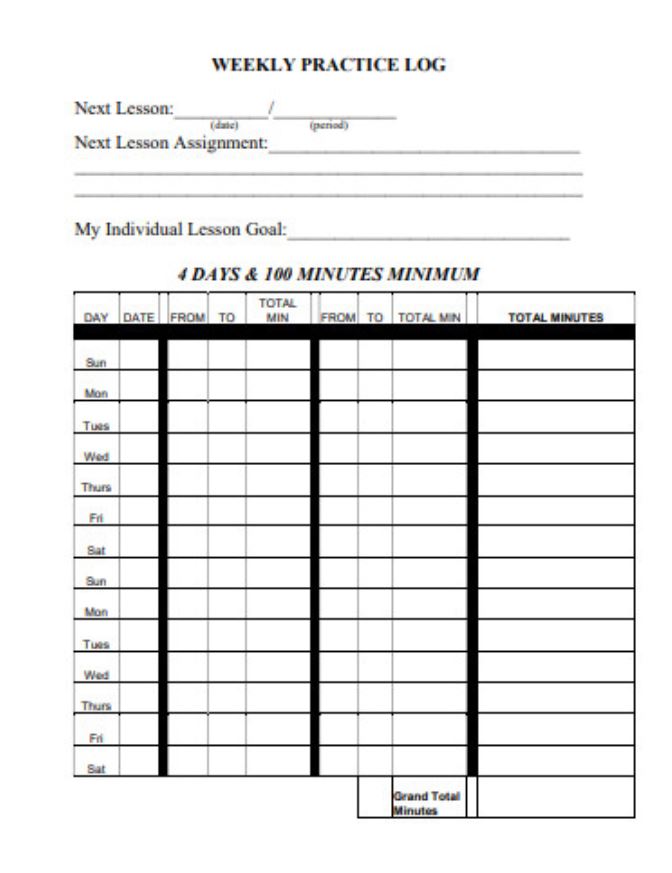
Why this is the most useful story on the list: The three above are professionals. Joel Snape isn't. He's a writer who decided to teach himself piano from scratch and film the whole thing. His year-one progress video, covering roughly 350–400 hours of practice, has been watched hundreds of thousands of times.
What he actually did: No teacher. He used free YouTube channels for theory, scales and fingering, plus Alfred's Basic Adult Piano Course as a spine. He worked through Für Elise, The Entertainer and other standards. He went on to film a second year, then a third.
Do the maths on that number:
- 350–400 hours over a year is roughly an hour a day
- Cut it to 20 minutes a day and you're at year two for the same result
- Cut it to 20 minutes five days a week and you're still there eventually
- The variable is calendar time, not whether it happens
- Nobody watching that video can tell how old he was when he started
Where to find a hundred more of these: Spend a week in r/piano and you'll find the "one year progress" post is practically a genre — adult beginners filming themselves at month one and month twelve. The Piano World adult beginners forums are the older, slower-moving version of the same thing. And YouTube has plenty of learners documenting starts at 79 and beyond. The sample size is enormous and it points one direction.
6. What the Research Says About Adult and Older Brains
The headline finding: Bugos and colleagues randomly assigned musically inexperienced adults aged 60–85 to six months of individualised piano instruction or no training. The piano group significantly outperformed controls on measures of executive function and working memory — and the gains were still measurable three months after training ended.
It replicates: Seinfeld and colleagues found older adults randomised to piano training showed improved processing speed and executive function. A 2022 randomised controlled trial by Bugos and Wang found piano training enhanced both executive function and psychosocial outcomes in ageing adults. Georgia Tech's psychology department has covered this literature directly in the context of picking up piano later in life.
Read those results carefully, because they're stronger than they look:
- These were complete beginners in their sixties, seventies and eighties
- They learned enough piano, fast enough, for it to change cognitive test scores
- Six months. Not six years
- Nobody in these studies hit a wall marked "too old"
- The measured benefit ran in the opposite direction from the myth
The blunt version: If people in their eighties can learn piano well enough to move the needle on standardised cognitive measures, the question of whether 38 is too late is not a serious question.
7. The Advantages Adults Actually Have
Nobody lists these, so here they are:
You chose this. The single biggest predictor of whether someone still plays in five years is whether they wanted to in the first place. Most children who take lessons didn't choose them, which is why so many quit at 13 and why so many adults arrive with a decade of resentment attached to the instrument.
You understand structure. An adult can hear that a chorus repeats, notice that bars 9–16 are bars 1–8 transposed, and skip practising them separately. Children brute-force this. You don't have to.
You can diagnose your own problems. When a passage falls apart, an adult can isolate the two beats that are actually failing and drill those. That's a metacognitive skill children largely lack, and it's worth a startling amount of practice time.
You can pick your repertoire. Nobody is assigning you graded exam pieces. You can spend three months on one song you love, which is a far better motivational engine than working through a book you're indifferent to.
You know how learning feels. You've been bad at something and become good at it before — a language, a sport, a job. You already know the plateau is normal. Children experience the plateau as evidence they're untalented.
8. The Mindset Traps That Actually Stop Adults
Trap 1: All-or-nothing practice. "I don't have an hour, so I won't practise today" is what kills adult learners, and it's a lie. Fifteen focused minutes daily beats a two-hour weekend session, because consolidation happens during sleep. Frequency outperforms duration.
Trap 2: Comparing your month three to someone's year eight. The internet is full of astonishing playing. It's also full of people who've been at it since 1998. Compare yourself to your own recordings from three months ago instead — record yourself monthly, it's the single most motivating habit available.
Trap 3: Embarrassment about sounding bad. Sounding bad is not a phase you get past by waiting. It's the mechanism. Every hour spent sounding bad is the price of the hour where you don't.
Trap 4: Skipping the boring foundations. Adults are prone to jumping straight to a piece far above their level, which is how bad habits calcify. Get your hand position right early — unlearning tension later costs far more time than learning it properly costs now.
Trap 5: Quitting during the plateau at months four to six. There is a reliable stretch where the beginner novelty has worn off and the intermediate payoff hasn't arrived. Everyone hits it. The people who are still playing at year three are simply the ones who kept showing up through it.
Common Questions About Starting as an Adult
Realistically, how long until I can play something I actually like? Simple arrangements of real songs are reachable in weeks, not years. Joel Snape was working through Für Elise inside twelve months of self-teaching. Set the target at "recognisable and enjoyable," not "concert-ready."
Are my hands too stiff at this age? Dexterity is trainable at any age, and the studies above worked with participants up to 85. Stiffness responds to consistent gentle practice. Pain does not — if something hurts, stop and fix the technique.
Do I need a teacher, or is YouTube enough? Plenty of people have self-taught successfully. But a teacher catches the tension and fingering errors you can't see yourself, and the adult beginners who progress fastest tend to have at least occasional lessons. Even monthly check-ins help.
Is it different for kids? Somewhat. Children absorb physical technique faster; adults absorb theory and structure faster. Both get there. If you're learning alongside your child, you'll each be ahead in different places, which is a genuinely good way to keep both of you going.
Final Thoughts: The Only Question That Matters
The age question is a proxy. What people are really asking is "will I waste my time and feel foolish?"
The answer from every corner of the evidence — professionals who started at 17 and 35, ordinary people documenting their first year online, and randomised trials in people three times that age — is the same. The instrument does not check your birth certificate. It responds to consistent, attentive practice, and it responds to that from anyone.
Pick a song you love. Learn eight bars of it. Do that four times a week.
In a year you will be someone who plays piano, and the age you started will be the least interesting fact about you.