Why You Still Can't Read Music After a Year of Piano Apps
There's a specific moment that happens to app learners, usually somewhere between month eight and month eighteen.
They can play six or seven songs. They've completed dozens of lessons. Then someone hands them a printed score, or they open a PDF of something they want to learn, and nothing happens. The notes are just shapes. They can find middle C, count up, work out that it's an F, and by the time they've done that for four notes they've lost the rhythm entirely.
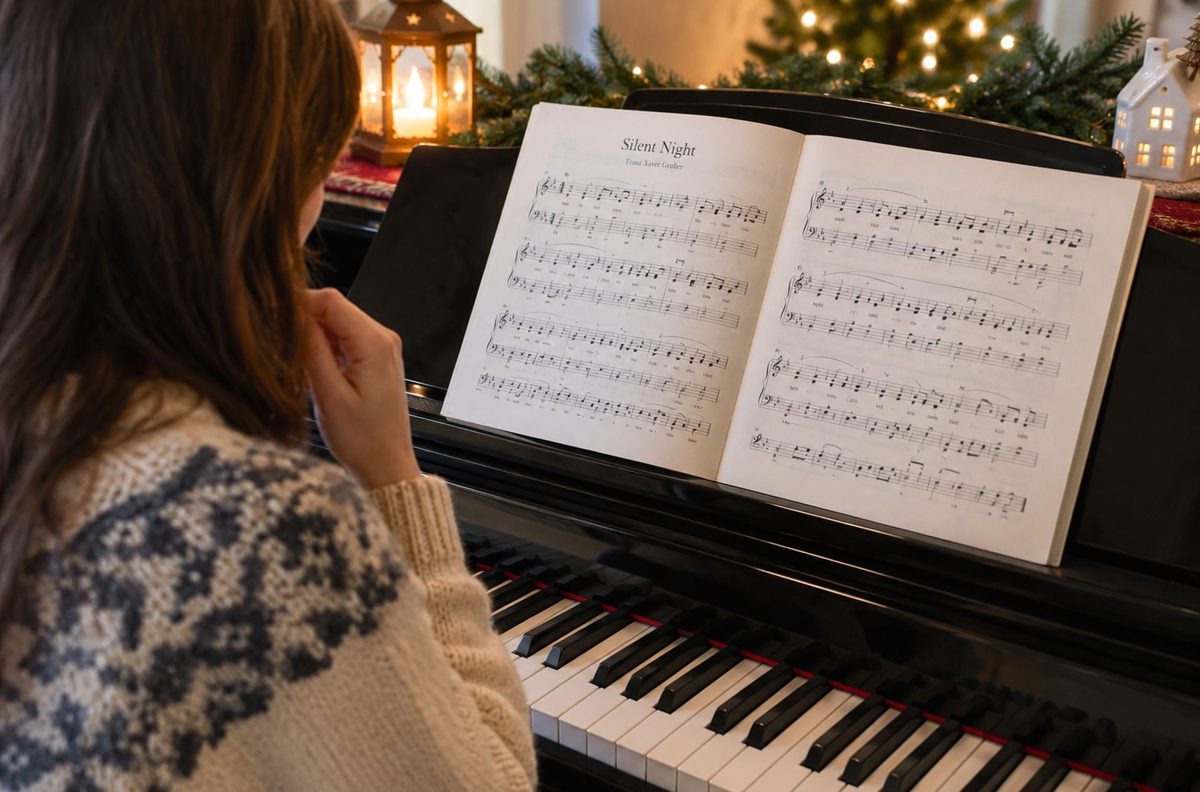
Their first assumption is that they're stupid, or unmusical, or too old. None of those are true. What's actually happened is that they spent a year practising a different skill to the one they thought they were practising.
Let me be fair up front, because most posts on this subject aren't: Simply Piano does display real notation. It isn't Synthesia. It has a Soloist path that teaches reading traditional sheet music with sight-reading drills that get progressively harder, and the lessons were built by music teachers with accreditation from Trinity College London. flowkey's own description lists courses on how to read sheet music. These aren't cynical products.
The gap is subtler than "they don't show you notation," and it's worth understanding precisely, because the fix is precise too.
1. Following Music and Reading Music Are Different Skills
What the app actually asks of you: A cursor moves across the staff. The current note is highlighted. You press keys; the app listens and tells you instantly whether you were right. If you're wrong, it waits.
flowkey describes this feature plainly in its App Store listing: Wait Mode listens to your playing and waits for you to hit the right notes. That's a genuinely good learning feature. It's also, over months, a crutch you never notice yourself leaning on.
What you're actually training:
- Matching a highlighted symbol to a key, with a correctness signal
- Trial and error, since a wrong note gets immediate feedback and a free retry
- Reliance on a cursor to tell you where you are in the music
- Memorising specific songs through repetition, which feels like reading because notation is on screen
What you aren't training:
- Looking at a note you've never seen and knowing what it is before you play
- Holding your place in the music without a marker
- Keeping going when you get one wrong, which is most of what real reading is
- Processing rhythm independently of a sound you've already heard
The tell: ask an app learner to play something they've practised fifty times, with the app closed and the score in front of them. Most can't. They weren't reading the screen — they were being guided by it, and after enough repetitions they were playing from memory with notation as decoration.
2. You Never Read Anything Cold
This is the single biggest structural gap.
Sight-reading means playing music you have never seen before. That's the definition. Not playing a familiar piece from the page — playing an unfamiliar one.
A review by a competing app developer, who says openly that he runs a rival product and tested Simply Piano across multiple sessions, puts the issue precisely: Simply Piano has no dedicated sight-reading mode, so you can't request a new piece you've never seen at your level and practise reading it cold — reading is implicit in playing songs rather than the explicit skill the app builds.
That's the whole thing in one sentence, and it's true of most of the category.
Why this matters more than it sounds:
- Reading is a skill you build by failing at fresh material, not by succeeding at familiar material
- Every repetition of a song moves it further from reading and closer to recall
- The app's core loop — practise this song until you can play it — is the opposite of what reading practice requires
- You can complete an entire curriculum without ever once decoding something unfamiliar
An analogy that isn't quite a cheat: it's the difference between recognising a hundred words you've been drilled on and being able to read a newspaper. The first feels like progress and doesn't generalise.
3. The Theory Underneath Gets Skipped
The app's design goal works against this deliberately. The whole pitch of the category is playing real songs in minutes rather than slogging through theory first. That's a legitimate and popular choice. It's also why people hit a wall.
One long App Store review from a player who started at five or six and returned to piano as an adult makes the complaint concretely. In their experience, the app's material was essentially all in 4/4, with no key signatures, meaning students would be caught out by 3/4, 6/8 or 5/4 and dumbfounded by anything outside C major or A minor.
I'd treat one user's account as one user's account rather than a spec sheet — apps update, and paths differ. But it points at something real about the trade-off.
What tends to be thin across the category:
- Key signatures, and what a sharp at the start of the line actually means for the rest of the piece
- Time signatures other than 4/4
- Counting rhythm as an independent skill, rather than copying a rhythm you've heard
- Ledger lines above and below the staff
- Why any of it is arranged the way it is
The consequence: you can play in C major with a moving cursor and genuinely not know what to do with a page that has two flats on it.
4. The Plateau Is Predictable
Three months of real progress, then repetition. The same reviewer describes a recurring arc: beginner courses that are excellent, intermediate courses that are thin, no graded progression comparable to ABRSM or RCM, and many users reporting three months of clear progress followed by a plateau where they realise they've seen everything the app has.
Another reviewer, a pianist testing the platform properly, concluded that it fell well short of expectations — good content, but oversimplified, with poor arrangements and a weak progression path.
Why the plateau and the reading gap are the same problem: Graded syllabuses exist because progression in piano is largely progression in reading. Grade 3 isn't harder than grade 2 mainly because the notes are faster — it's harder because there's more information on the page and you're expected to process it. An app that doesn't build reading as an explicit skill has nowhere to send you after the beginner material, so it sends you sideways: more songs, same difficulty.
That's the wall. And it arrives right about when the annual subscription renews.
5. The Honest Counterargument: Maybe You Don't Need to Read
This deserves a fair hearing, because it's often correct.
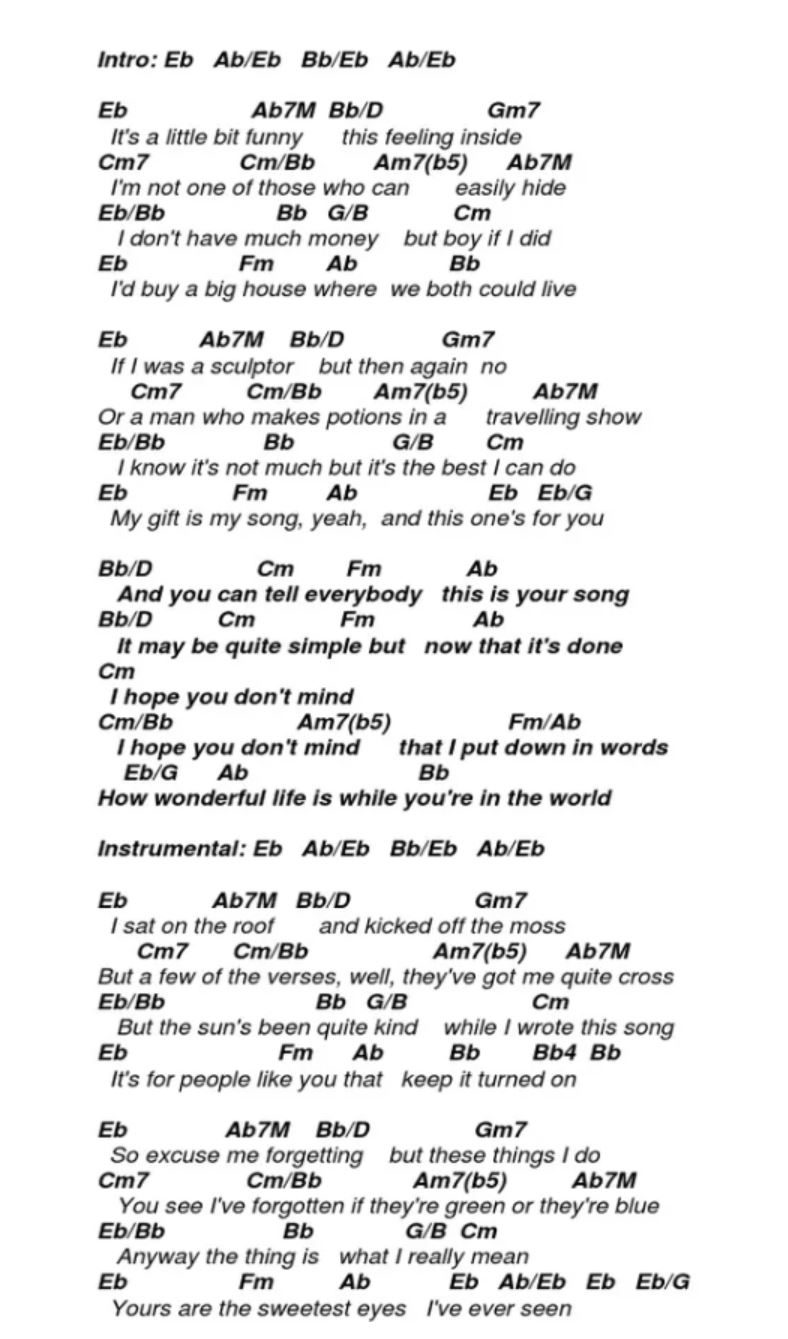
Simply Piano now offers two routes. Alongside the traditional Soloist path there's a Chords path focused on building chords, common progressions, left-hand rhythm patterns and reading lead sheets.
A reviewer who runs a piano channel is refreshingly blunt about where that took him. He learned entirely through chord-based courses, and says that as a result his sight-reading abilities are close to zero, that this hasn't been the slightest issue, and that he's been playing live gigs with bands for a couple of years. He also notes he found the traditional sight-reading approach frustrating and time-consuming, didn't get far with it, and never looked back after switching.
He's not wrong. If your goal is to play pop, rock, worship music, or to accompany yourself singing, chords and lead sheets get you there faster and reading full notation is close to optional. A huge number of working musicians barely read.
So the real question isn't "should everyone read?" It's this:
- Do you want to play classical repertoire? You need to read. There's no chord-chart route to Chopin.
- Do you want to play whatever you find, rather than whatever's been arranged for your app? You need to read.
- Do you want to play in a choir, a pit band, a church, a school? You need to read.
- Do you want to jam, write songs and play pop by ear? Chords may genuinely be enough.
What's not defensible is drifting into the second category by accident, after a year of an app that showed you notation, while believing you were in the first. That's what happens to most people, and it's worth choosing deliberately instead.
6. What Reading Practice Actually Looks Like
If you do want it, here's what the apps aren't giving you. None of this requires buying anything.
Read something new every day, badly. Ten minutes. Music well below your playing level — if you can play grade 3 pieces, read grade 1. Play it once, at whatever speed lets you keep going, and do not stop to fix mistakes. Then never play it again. The discomfort of not correcting yourself is the entire exercise; stopping to fix things is practice, not reading.
Stop counting up from middle C. This is the habit that traps people for years. A Trustpilot reviewer of a reading course describes exactly it: plateaued for over fifteen years, still stopping to count ABCs around every measure and trying flashcards without progress.
The fix is landmark notes. Learn a handful of anchors cold — bass F, middle C, treble G, treble C — and read everything else as a distance from the nearest anchor. Three notes up from treble G, rather than G-A-B-C counted one at a time.
Read intervals, not individual notes. Fluent readers don't see "E, then G, then C." They see a third, then a fourth, and their hand makes the shape. Notation is fundamentally a picture of distance and direction — the letter names are a lookup you should be using less and less, not more.
Separate rhythm from pitch. Clap or tap the rhythm of a line before you play a note of it. Most reading breakdowns are rhythm breakdowns wearing a disguise, and doing them separately is far faster than doing both badly at once.
Use the app for what it's genuinely good at. Song learning, motivation, daily streaks, and getting an absolute beginner playing within a week. Those are real strengths and the reviews that dismiss them entirely are being unfair. Just don't expect a tool optimised for song completion to build a skill that requires constant fresh material.
Common Questions
Should I cancel my subscription? Not necessarily. If it's keeping you at the piano daily, it's earning its money. Add ten minutes of cold reading alongside it rather than replacing it. The apps and reading practice do different jobs.
How long does it take to read fluently? Basic fluency in one clef, at a slow tempo, on simple material: a few months of daily practice. Comfortable two-clef reading of intermediate music: a year or two. The variable is daily consistency, not talent — as our piece on why adults can excel at piano covers, adult learners often do better at this specific skill than children because it rewards pattern recognition.
I've been playing for two years and can't read. Have I wasted the time? No. You have technique, hand independence, repertoire and a practice habit — all of which take much longer to build than reading does. You're adding a skill to an existing foundation, not starting over. If anything you'll pick it up faster than a beginner would.
What should I read from? Public-domain material is free and legal, and it's graded better than most app content. IMSLP, Musopen and OpenScore are the three worth bookmarking — we've listed specific starting pieces in easy first songs with free sheet music.
Does using a MIDI cable instead of the microphone help? For note accuracy in the app, yes. For reading, no — the input method doesn't change what skill is being trained.
Final Thoughts
The apps aren't scams and the people who made them aren't fools. They solved a genuinely hard problem: getting a total beginner to play a recognisable song in their first week, which keeps people at the instrument long enough to get anywhere.
What they didn't solve — what's arguably unsolvable inside a song-completion loop — is reading, because reading is built by repeatedly encountering material you haven't seen and surviving it. Every design decision that makes an app satisfying works against that.
So if you've finished a course and still can't open a score, you haven't failed at anything. You practised what you were given. The fix is ten minutes a day of something new, played badly, without stopping.
That's it. It's less fun than a streak counter, and it's the thing that eventually lets you play whatever you want.
Worth reading next: 10 common mistakes beginners make, and practical advice for absolute beginners if you're building a routine from scratch.