The 3 Best Digital Pianos Under $500 (2026)
Disclosure: some links below are affiliate links. If you buy through them we may earn a small commission at no extra cost to you. It doesn't affect which pianos we recommend.
There's a hard line in digital pianos, and it sits right around this price.
Below it, you're choosing between unweighted 61-key boards and 88-key instruments with semi-weighted action — which is what our guide to the best keyboards under $300 covers. Above it, you get graded hammer action from a company that has been making pianos for a century, and that changes what you're capable of developing as a player.
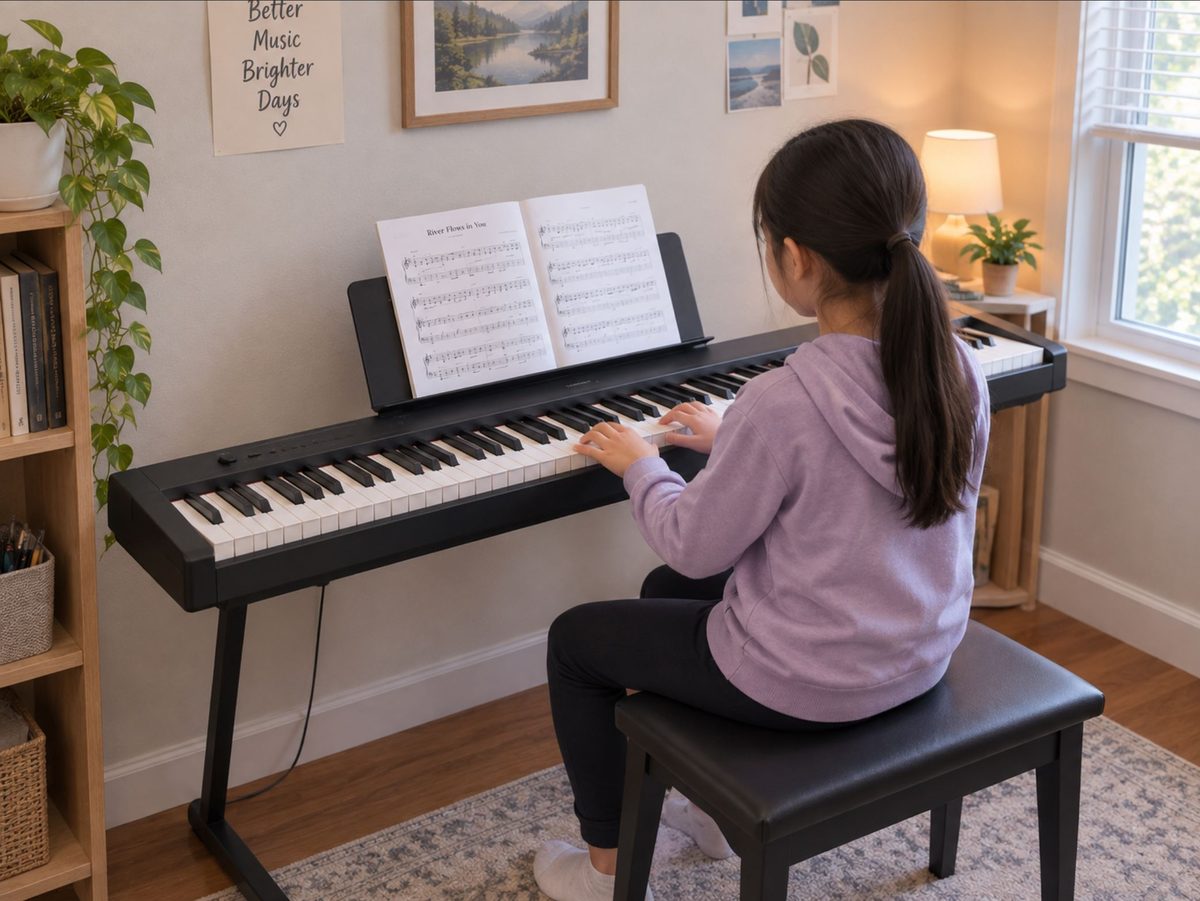
Hammer action means each key is moved by a weighted mechanism rather than a spring, and graded means the bass keys are heavier than the treble, as on a real piano. The practical consequence: your fingers build the strength and control that transfer to an acoustic. Semi-weighted keys don't do that, and the gap shows up the first time you sit at a real piano and find it exhausting.
Three instruments dominate this bracket. They're genuinely different from each other, so the choice is less about which is best and more about which trade-off you want.
1. Roland FP-10 — Best Key Action, Full Stop
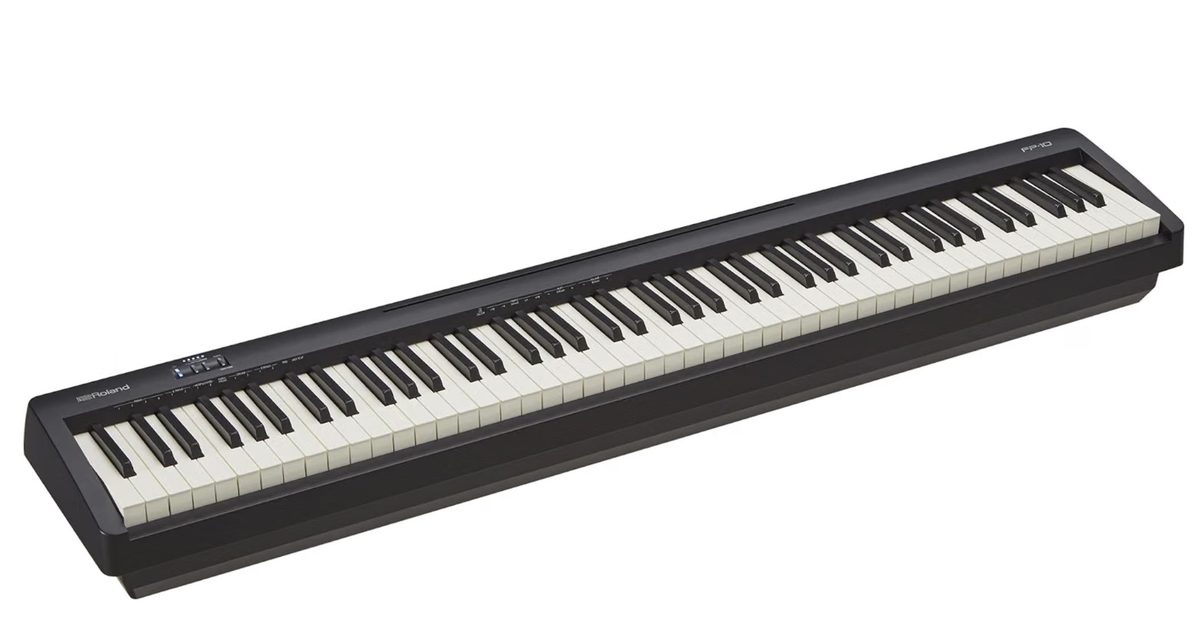
Typically $450–500 · View on Amazon
Why it wins on the spec that matters most: The FP-10 uses Roland's PHA-4 Standard hammer-action keyboard with high-resolution sensing, escapement, heavier touch in the low registers and lighter in the highs, and moisture-absorbing ivory-feel key surfaces, driven by Roland's SuperNATURAL piano engine.
That's the same PHA-4 action Roland puts in the considerably more expensive FP-30X. You are getting a flagship-adjacent keybed at the entry price, which is unusual and is the entire argument for this instrument.
What escapement actually means for you: Real grand pianos have a slight notch in the key travel as the hammer disengages. It matters for fast repeated notes — trills, tremolos, anything where the key doesn't fully return before you strike again. Most sub-$500 pianos omit it. This one doesn't.
The rest of the package:
- SuperNATURAL sound engine, widely considered the best piano tone in this bracket
- Twin Piano mode, splitting the keyboard into two identical ranges for teacher and student
- Bluetooth MIDI for connecting to learning apps and notation software
- USB MIDI for computers and DAWs
- The most compact 88-key digital piano in its class at 1284 × 258mm
The honest limitations: The FP-10 supports Bluetooth MIDI only, not Bluetooth audio — you cannot stream a backing track through its speakers. The speakers themselves are modest. The control panel is sparse, so changing settings often means reaching for the Piano App on your phone. And the included pedal is a basic footswitch; you'll want the DP-10 for half-pedalling.
Buy it if: you intend to learn properly, might move to an acoustic one day, or care more about how the instrument feels under your hands than what else it does.
2. Yamaha P-145BT — Best All-Rounder
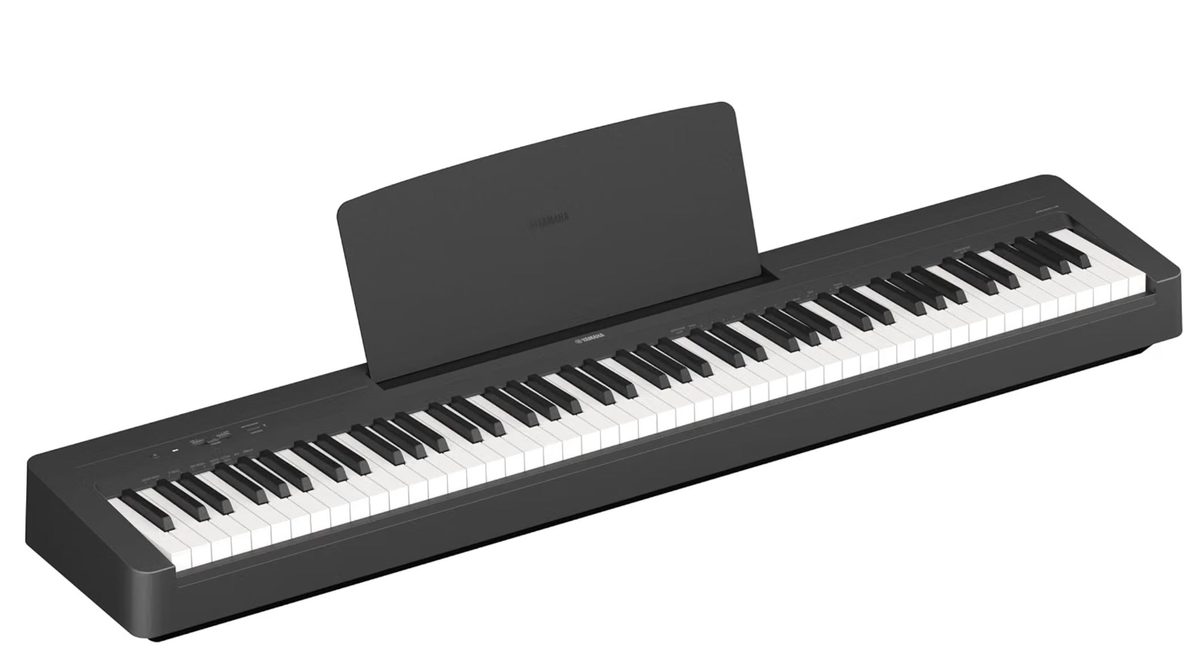
List $549.99, street $390–470 · View on Amazon
The safe, sensible choice: The P-145BT has 88 weighted GHC (Graded Hammer Compact) keys, 64-note polyphony, 10 voices, 2 × 7W speakers and an included sustain pedal. The grand piano voice is sampled from Yamaha's CFIIIS concert grand, and damper resonance DSP recreates the sympathetic ringing you get when the sustain pedal is down.
GHC is Yamaha's newer compact action, built to offer the same weighted feel as the GHS keys in previous P-series models but in a much shorter, thinner body. If space is tight, this is the slimmest credible option.
Where it beats the Roland:
- Bluetooth audio, so you can stream songs through the piano's own speakers and play along
- Smart Pianist app, which handles settings, built-in lessons and sheet music display on a tablet
- Rec'n'Share for recording audio and video of yourself directly
- Stronger speakers than the FP-10
- Yamaha's resale value and service network, which is genuinely better than anyone else's
The one spec to look at carefully: 64-note polyphony. That's the number of individual notes the instrument can sound at once, including notes still ringing under the sustain pedal. It's adequate for almost all beginner and intermediate playing, but it's half what the Casio offers and you can hit the ceiling on dense pedalled passages. Most people never notice. Some do.
Watch the price. List is $549.99, Sweetwater sells it around $469.99, and it has dropped below $390 on Amazon during sales. Don't pay list.
Buy it if: you want the most complete package, you'll use the app features, or you want the brand least likely to give you trouble in five years.
3. Casio CDP-S160 — Best Portable and Best Value
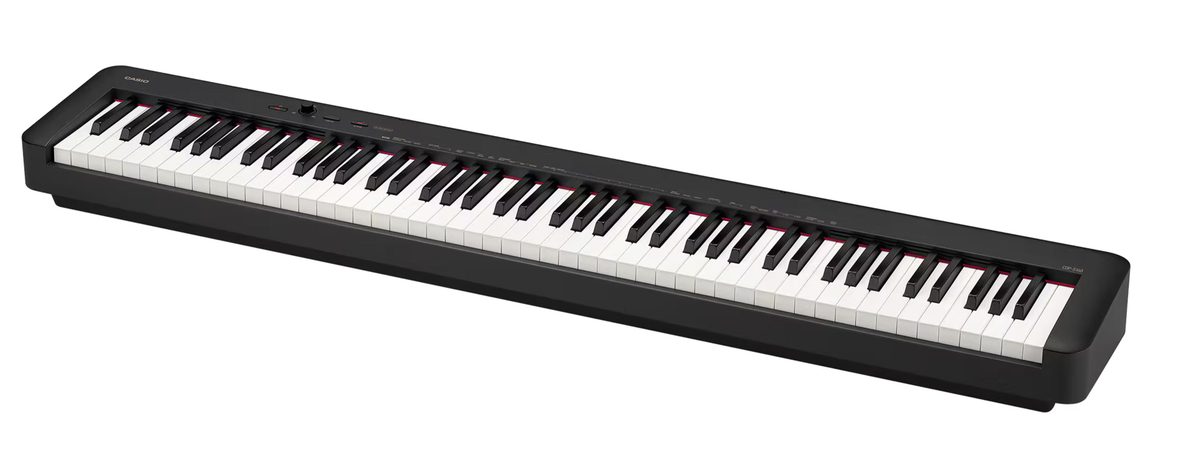
Typically $400–450 · View on Amazon
The one you can put away: The CDP-S160 has 88 keys with Casio's Scaled Hammer Action Keyboard II, 10 tones with a layer function, 16W speakers, duet mode, USB-MIDI and an included SP-3 sustain pedal. Casio's high-density mounting technology gets the depth down to 232mm, and the whole instrument weighs 23.1 lbs and runs up to 13 hours on batteries.
A full-weighted 88-key piano that runs on batteries and fits behind a sofa is a genuinely useful thing, and nothing else in this bracket does it.
The practical strengths:
- Cheapest real hammer action from a legacy brand
- Casio Music Space app displays PDF scores and plays MIDI songs with independent pitch and tempo control
- Duet mode for lessons
- One-button recorder
- Optional SP-34 three-pedal unit if you later want sostenuto and soft pedals
- Class-compliant USB, so it connects to a Mac or PC with no drivers
The trade-offs: Casio's action is lighter than Roland's PHA-4 and some players find it a little plasticky by comparison. No Bluetooth on this model. The tone is good but not Roland-good.
Buy it if: you don't have a permanent practice space, you want the most piano for the least money, or portability is a real constraint rather than a nice-to-have.
How to Choose Between Them
The short version:
- Best feel → Roland FP-10
- Best features and support → Yamaha P-145BT
- Best portability and value → Casio CDP-S160
If you're deciding by what you'll actually do:
- Taking lessons or working toward grades → Roland, for the action
- Learning alone with apps and backing tracks → Yamaha, for Bluetooth audio and Smart Pianist
- Sharing a room, renting, or short on space → Casio
- Buying for a child who may quit → any of the three holds resale value well, which the sub-$300 options do not
What none of them have: Three pedals as standard, a furniture cabinet, or speakers that fill a large room. Those start around $700–900. If you want a piano that looks like a piano, that's the next bracket up.
Budget the Extras
All three include a basic sustain pedal or footswitch, but you'll still want:
- A proper sustain pedal with half-pedal support (Roland DP-10 or M-Audio SP-2), around $30–50. The included switches are on/off only.
- An adjustable X-stand or the manufacturer's dedicated stand, $40–100. Keys at elbow height when seated.
- An adjustable bench, $50–80. Not optional if you care about technique.
- Closed-back headphones, whatever you've got.
Get the seating height right from day one — it's where most of the hand position problems beginners develop actually originate.
Digital pianos need almost none of the upkeep an acoustic does, but if you're weighing a used acoustic instead, read our piano maintenance guide first — the running costs are the part people forget.
Common Questions
Is the jump from $300 to $500 worth it? More than any other upgrade you'll make. Going from semi-weighted to graded hammer action changes how your hands develop. Going from a $500 piano to a $1,500 one mostly buys better speakers and cabinetry. If you can only splurge once, splurge here.
Should I just buy one of the $300 options and upgrade later? Only if $500 genuinely isn't available now. Otherwise you'll spend $280, outgrow it within a year, and sell it at a loss. The three above hold value far better.
What about used? A used Yamaha P-45, P-125 or Casio PX-160 in this price range is often the best value going. Digital pianos have few wearing parts. Test every key, check the pedal jack, and confirm the speakers are clean at volume.
Do I need 88 keys? At this price you get them regardless, and yes — you'll want the range for pieces like River Flows in You and most of the intermediate repertoire.
Will a better piano make me practise more? A little, honestly. An instrument that feels good is one you sit down at. But the bigger factors are routine and whether you can read music — see common beginner mistakes and practical advice for absolute beginners.
Final Thoughts
If you know you're serious, buy the Roland FP-10 and don't look back. If you want the most useful all-round instrument and you'll use the app features, buy the Yamaha P-145BT on sale. If space or money is genuinely tight, the Casio CDP-S160 gives you the thing that matters — real hammer action — for the least.
Under $300 is a different decision with different answers, and we've covered it separately in the best keyboards under $300.
Once it arrives, these easy first songs with free sheet music are the fastest route to playing something real, and why adults can excel at piano is worth reading if you're starting later than you'd like.
Prices checked September 2026. Always confirm current pricing before buying.