How to Play 'Clair de Lune' by Debussy on Piano

Melodease is our own piano learning tool, so weigh our enthusiasm accordingly. Everything below works just as well with printed sheet music and a metronome.
Key: D♭ major — five flats · Time signature: 9/8 · Marking: Andante très expressif · Length: 72 bars · Difficulty: Advanced
Let's be honest about this one immediately, because almost nobody is.
Clair de Lune is advanced repertoire. It sits at Henle level 6, roughly ABRSM grades 7 to 8, around RCM level 10. It's in D♭ major with five flats, it's in 9/8, and the tempo is deliberately elastic rather than steady.
It is also one of the most attempted-too-early pieces in the entire piano literature, and that mismatch is why so many people have a half-learned version of the first page sitting in their hands.
Play it now
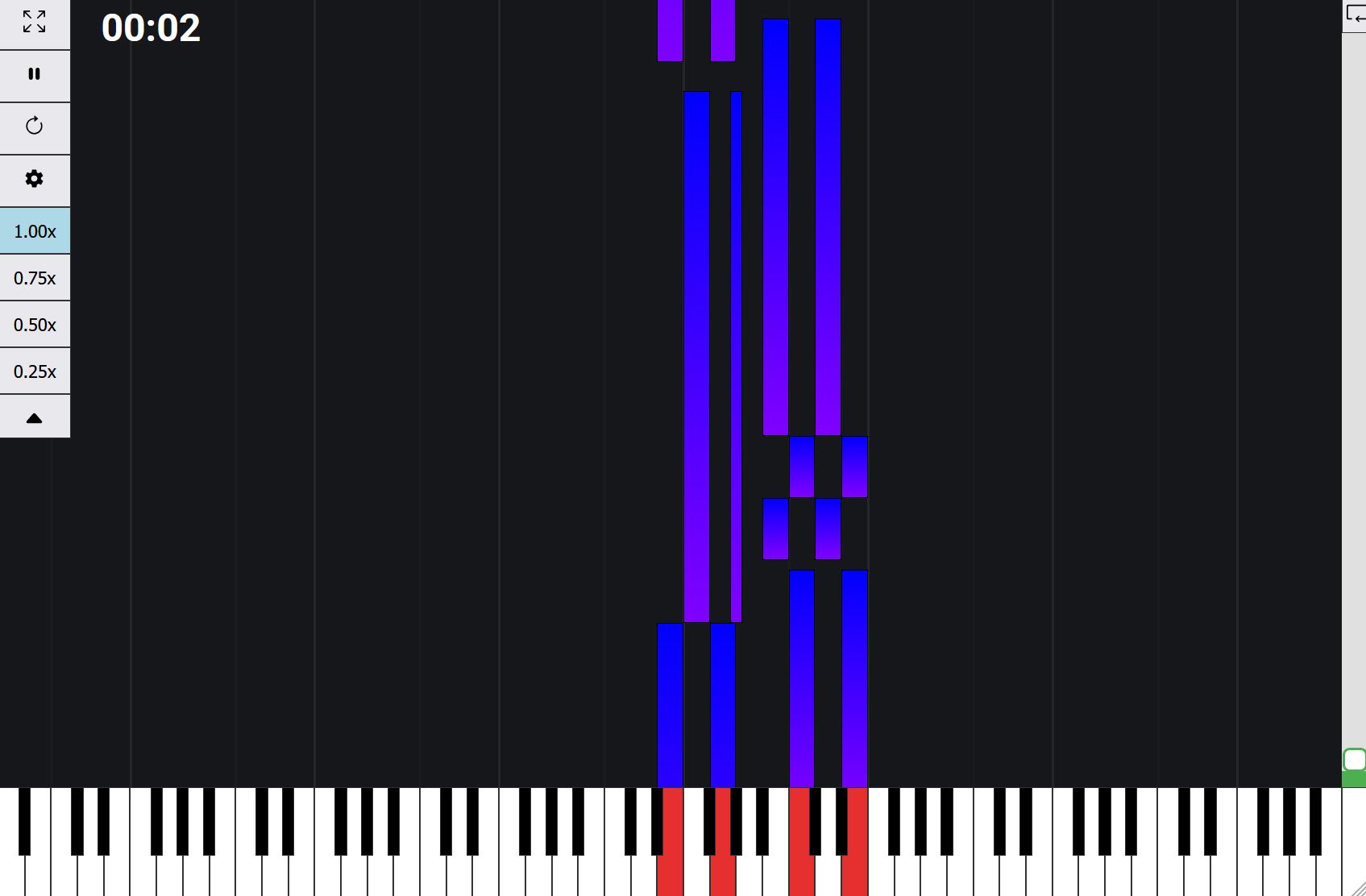
One click and you're playing
The score is already loaded. No search, no setup, no choosing a difficulty level first.
- Slow it right down — 9/8 at an expressive tempo needs taking apart
- Loop the opening eight bars, which is the section everyone knows
- Right hand, then left, then both — the app tracks where you are
- Switch on half view when the five flats stop making sense on the page
Free account, no card. Takes about ten seconds.
The rest of this is a straight assessment: what makes it hard, which bit you can realistically learn, and where to get the score for nothing.
Free Sheet Music, Legally
Unlike every pop song on this site, this one is public domain. Debussy died in 1918 and the music was published in 1905, so the score is free to download, print and share.
Get it from IMSLP, where the whole Suite bergamasque is available in multiple editions along with recordings.
A few things worth knowing when you're choosing an edition:
- Take a clean, modern engraving if there's a choice. Some scans are of old editions with cramped spacing, which makes five flats considerably harder to read.
- The suite has four movements. Clair de Lune is the third.
- There are simplified arrangements floating around which are also public domain or freely licensed. For a first attempt they're a legitimate option and not cheating.
Why It's Hard
Four reasons, and the first one is the one people notice too late.
Five flats. B♭, E♭, A♭, D♭ and G♭ are all flat throughout. If your repertoire so far is C and G major, this is a very different landscape and it takes real time to stop tripping over.
The compensation, and it's a genuine one: those five flats correspond to the black keys, and D♭ major actually falls comfortably under the hand once your brain has accepted the key signature. Pianists who play it describe it as awkward to read and comfortable to play, which is an unusual combination.
It's in 9/8. Nine eighth notes per bar, grouped in threes. That's compound time, and it feels quite different from the 4/4 most pop repertoire lives in. Counting it as three groups of three rather than nine separate beats is the only way it works.
The tempo moves. Debussy marks it Andante très expressif — slow and very expressive. The tempo is meant to flex, expanding and contracting to let the music breathe. That's not optional interpretation; it's written into the character. Playing it metronomically produces something technically correct and completely dead.
The middle section modulates to C♯ minor. That's the tonic minor written enharmonically, and it comes with a push forward in tempo toward the piece's first real climax before falling back to a passage Debussy marks calmato. This section is noticeably harder than the opening.
What You Can Realistically Learn
Here's the practical advice, and it's the same shape as my advice on Hedwig's Theme and Bohemian Rhapsody.
The opening is reachable well before the rest is. The first page — the part used in every film, advert and TV montage — is gentler than what follows, and an intermediate player can get it sounding genuinely lovely with patient work.
The middle section is where it becomes advanced. Faster, denser, more hand independence, and a climax that needs real control.
So: learn the opening. Play it beautifully. Leave the rest for later. That is a legitimate musical outcome, not a compromise, and it's how a lot of people live with this piece for years before taking on the whole thing.
If you're a genuine beginner, play something else first and come back. River Flows in You builds the arpeggiated left hand this piece needs. When I Was Your Man is the confidence piece. Our realistic timeline puts grade 7 at around year five for most adult learners.
Practice Order for the Opening
Weeks 1–2 — read it slowly, in D♭. Don't transpose to make it easier. The whole point is getting comfortable in five flats, and transposing creates a habit you'll have to undo. Name the notes out loud if it helps.
Week 3 — count the 9/8. One-two-three, two-two-three, three-two-three. Three groups of three. Clap it away from the keyboard until the shape is in your body.
Weeks 4–5 — hands together, very slowly. Slower than feels sensible. The piece's whole character is unhurried, so there's no pressure to speed up.
Weeks 6–8 — pedal and voicing. This is where it becomes music. Debussy's writing depends enormously on pedalling and on bringing out the right note in a chord. Both take longer than the notes did.
Realistic timeline: two to three months for the opening section, played well, if you're at intermediate level. Much longer for the complete piece, and it's a legitimate multi-year project.
Common Mistakes
Playing it too fast. The single most common. Andante très expressif is slow. The famous recordings run around five minutes for a 72-bar piece, which should tell you something.
Playing it metronomically. The tempo is supposed to breathe. A rigid Clair de Lune is a contradiction.
Over-pedalling. Debussy's harmony is lush and it muddies instantly. Change more often than instinct suggests.
Flat dynamics. It's mostly very quiet, and that quietness only means something if there's a dynamic range around it.
Transposing it out of D♭. Tempting, and it removes the key the whole sonority depends on. The piece sounds the way it does partly because of where it sits on the keyboard.
Starting it at grade 3. The most common mistake of all, and it's the reason this piece has such a long tail of abandoned attempts.
Where It Came From
Worth knowing, because the title explains the piece.
It's the third movement of the Suite bergamasque. Debussy began the suite around 1890, when he was in his late twenties, and didn't publish it until 1905. Quite how much he revised it in that fifteen-year gap is unclear.
It wasn't always called that. The movement was originally titled Promenade sentimentale. The fourth movement, Passepied, started life as a Pavane.
The title comes from a poem. Paul Verlaine wrote a poem called Clair de lune, and the suite takes its name from a line in it referring to bergamasks — a reference to Bergamo in Italy, and possibly to a rustic dance.
Clair de lune means moonlight. Which is the whole brief, really: the piece is marked to be played softly and expressively, and everything about the harmony is designed to sound like light on water.
Common Questions
What key is Clair de Lune in? D♭ major, with five flats — B♭, E♭, A♭, D♭ and G♭. The middle section moves to C♯ minor, which is the same tonic written enharmonically.
What time signature is Clair de Lune in? 9/8. Nine eighth notes per bar in three groups of three.
How hard is Clair de Lune? Advanced. Henle level 6, roughly ABRSM grade 7 to 8, around RCM level 10. The opening section alone is reachable at intermediate level.
Is Clair de Lune in the public domain? Yes. Published in 1905, composer died in 1918. The score is free on IMSLP.
Can a beginner play it? Not the full piece, no. A determined late-intermediate player can learn the opening. A true beginner should build up to it, and that's a multi-year path rather than a few months.
How long is it? Around five minutes, 72 bars.
Can I play it on 61 keys? The opening mostly. The full piece uses a wide range and wants 88.
The Short Version
- D♭ major, five flats, 9/8, Andante très expressif
- Advanced: Henle 6, ABRSM 7–8
- The opening is reachable at intermediate; the middle section isn't
- Free and legal on IMSLP
- Slow, quiet, and let the tempo breathe