The Best Keyboards for Small Churches in 2026
Disclosure: some links below are affiliate links. If you buy through them we may earn a small commission at no extra cost to you. It doesn't affect which keyboards we recommend.
Church keyboard guides almost always get written for the wrong church. They open with a Nord Stage 4, which costs north of five thousand dollars, and work down from there.
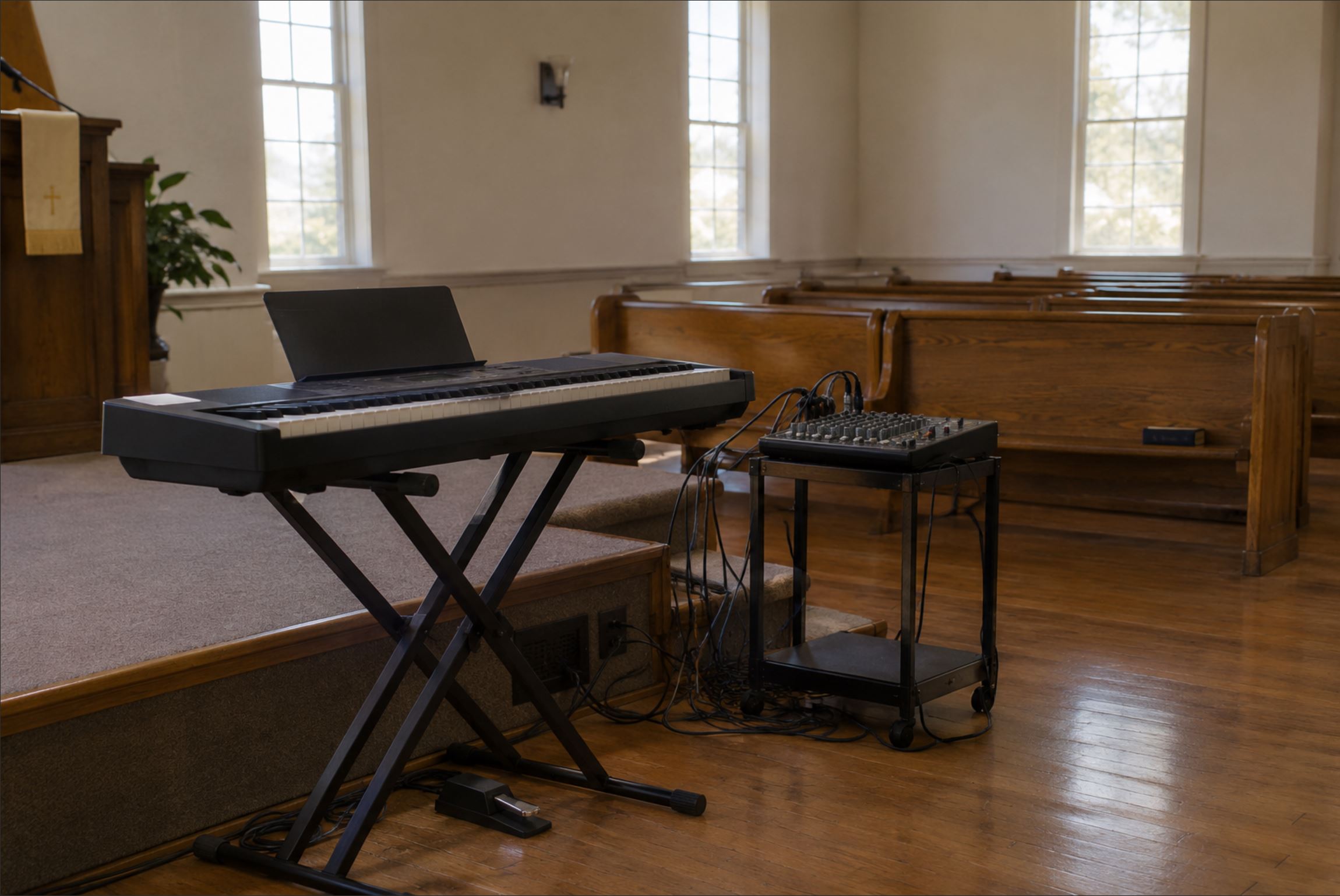
If you're buying for a congregation of eighty people with a volunteer rota of three players of wildly different ability, none of that applies. Your constraints are different and so is the right answer.
Before the list, here's what actually matters, because most of it doesn't appear on a spec sheet.
The Four Things That Actually Matter in a Church
A transpose button you can reach without a menu.
This is the single most underrated feature and almost nobody writes about it. Worship songs get pitched for whoever is singing that week, and whoever is singing that week will not be whoever sang last week. A keyboard where transposing means holding Function and pressing two keys is a keyboard that will be transposed wrong at least once a month, usually during the service.
Look for a dedicated transpose control on the front panel. It will save you more grief than any sound in the instrument.
Line outputs, not just headphones.
Your keyboard needs to reach the PA system cleanly. Quarter-inch line outs are the minimum. A keyboard with only a headphone jack can be made to work with an adapter, but the signal is noisier and the volume interacts with the headphone control, which means a volunteer can accidentally mute the whole instrument from the stage.
Organ and strings, not just piano.
A good piano sound is table stakes. What separates a church keyboard from a home one is everything else: a drawbar organ for traditional hymns, a string pad to sit under quiet moments, maybe an electric piano. In a small church the keyboard is often covering what a whole band would do elsewhere.
It has to survive volunteers.
Three different people will play it. One of them is fourteen. Someone will change a setting and not know how to change it back. The best church keyboard is the one where the sounds are on buttons you can see, not buried four menus deep, and where a power cycle restores sanity.
If your players are mostly beginners, it's worth also reading our guide to the 3 best piano keyboards for beginners, which covers the home-practice side of the same question.
1. Yamaha CK61 — Best Overall for a Small Church
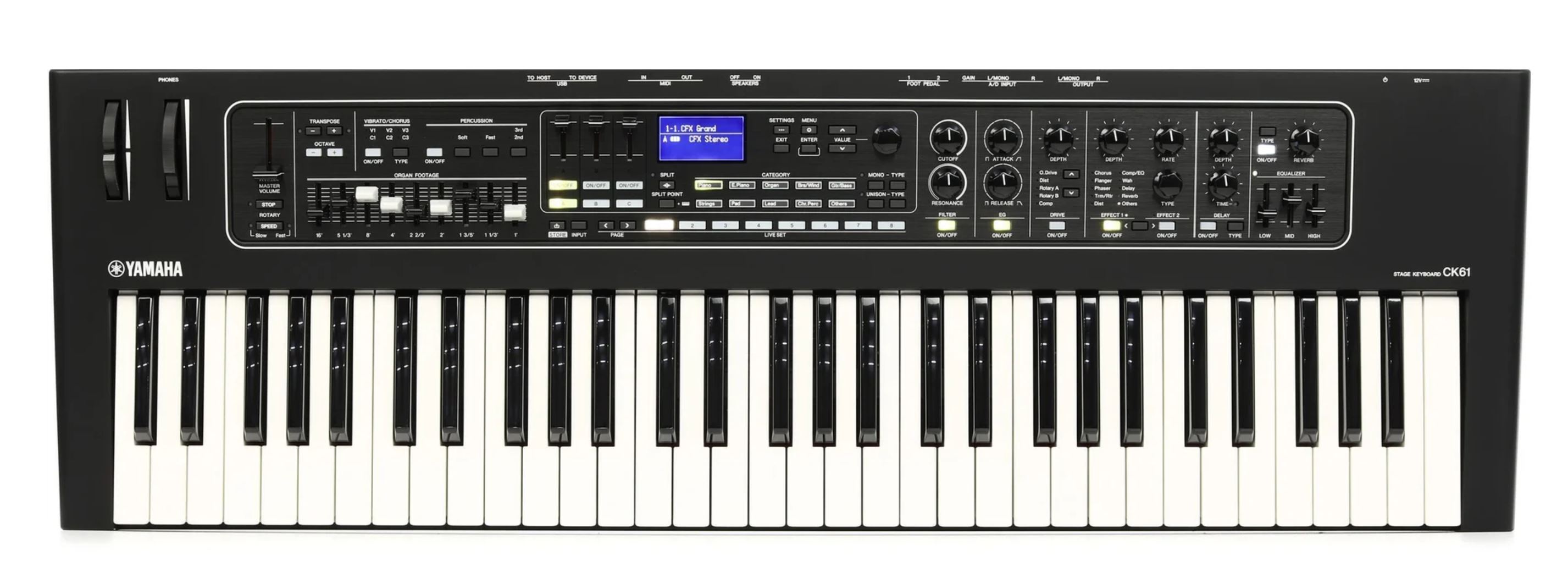
Around $1,000 · View on Amazon
If I could only recommend one keyboard for a small congregation, this is it.
The CK61 is a 61-key stage piano with physical drawbars, envelope and filter controls, a USB audio and MIDI interface, built-in speakers and battery power. It lists at $1,249 and generally sells for $999.
Why it fits churches specifically:
- Real drawbars, so your organ sound is adjusted by hand rather than through a menu. Hymns and contemporary songs both covered.
- Sounds laid out on the front panel where a volunteer can find them.
- Built-in speakers, which matter more than they sound. When the PA fails or you're rehearsing in a side room, the instrument still works on its own.
- Battery power for outdoor services, the carol event, the hall with no sockets near the stage.
- 61 keys, so one person can carry it.
The trade-off: the keys aren't weighted. For a classically trained accompanist playing hymns, that's a real downgrade and you want the CK88 instead. For a contemporary worship setting where the keyboard is mostly pads, organ and chords, it's barely an issue and the portability is worth more.
The value argument: the CK series uses the same AWM2 tone generation as Yamaha's CP stage pianos, which cost roughly twice as much, with the organ voices inherited from Yamaha's Reface YC.
2. Roland FP-30X — Best on a Tight Budget
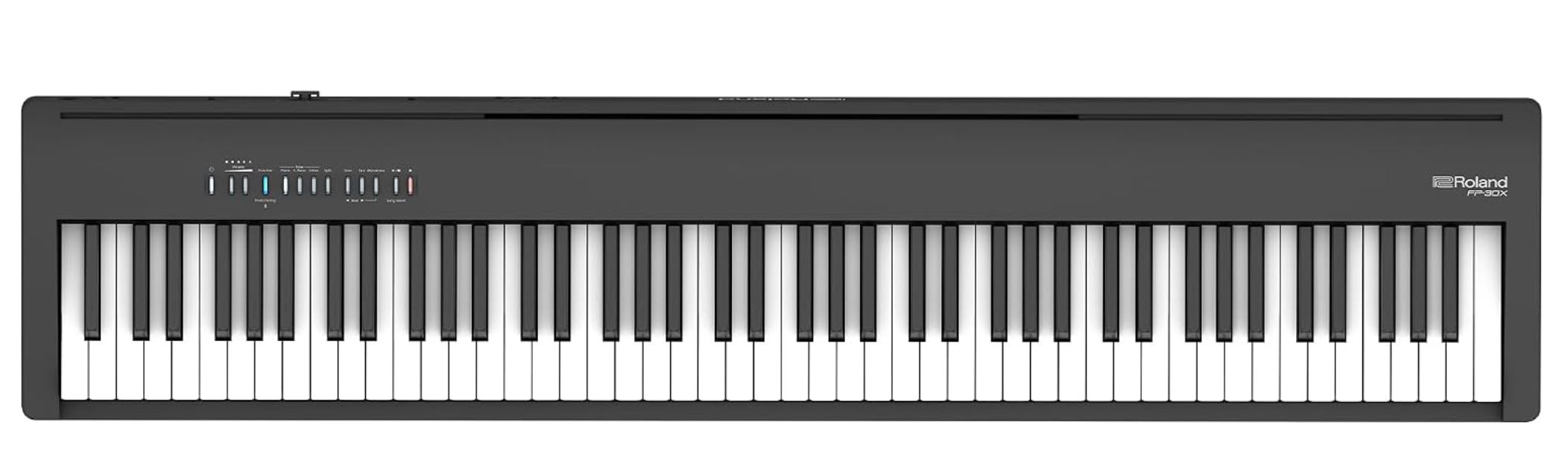
Around $650 to $700 · View on Amazon
When the budget is whatever was left in the fund after the roof repair, this is the answer.
The FP-30X is an 88-key digital piano with weighted hammer action, built-in speakers and output jacks for the PA. It typically sells between $588 and $700 depending on the retailer.
What you get:
- Proper weighted action, which matters if your player came up through lessons
- Roland's SuperNATURAL piano, which is the best piano sound at this price
- Enough non-piano sounds to cover organ and strings adequately
- Bluetooth, if someone wants to play along with a track
- Light enough to move, heavy enough not to wobble
What you don't get: drawbars, a deep sound library, or fast one-touch switching between patches. Changing sound mid-song means a button combination, which is fine for a confident player and not fine for a nervous one.
Buy it if: your service is piano-led, your budget is under a thousand, and your players are pianists rather than keyboard players. That describes a lot of small churches.
Also worth knowing: these turn up used constantly, often around $450 in good condition. If your budget is tighter still, the options in the 3 best digital pianos under $500 will cover a piano-led service, though you'll lose the line outs on some of them.
3. Yamaha CK88 — When You Need Weighted Keys and Organ
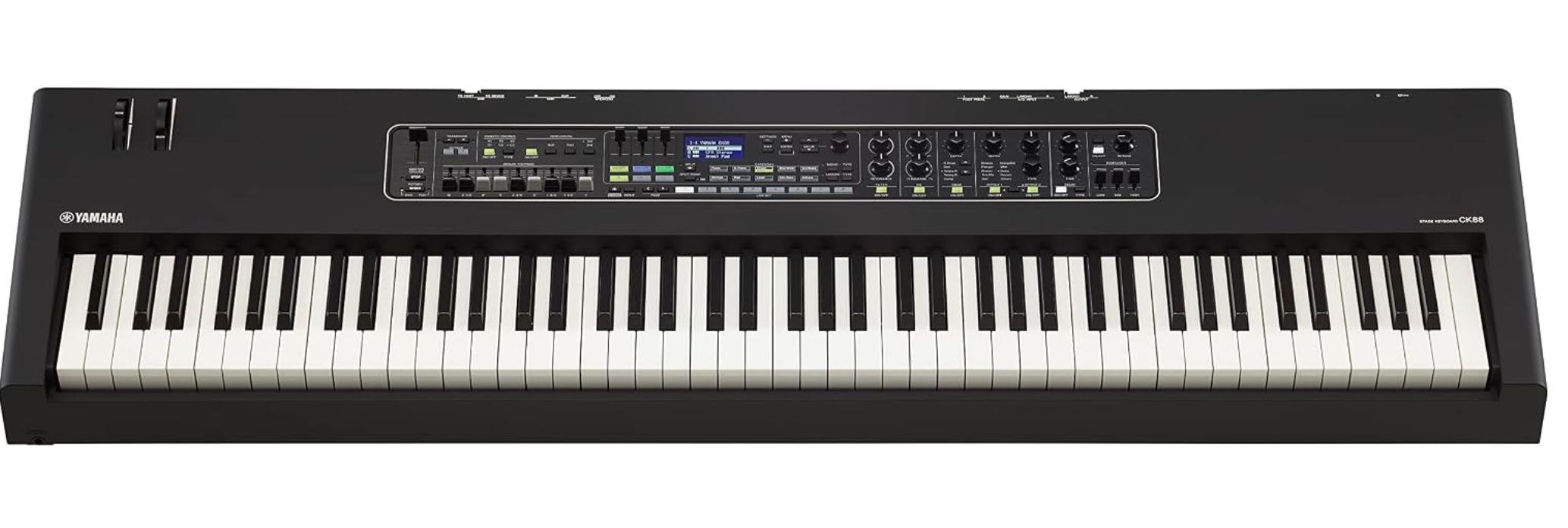
Around $1,500 · View on Amazon
Same instrument as the CK61 with a weighted 88-note GHSA keybed. Lists at $1,899 and sells around $1,499, weighing in at 28.9 pounds.
This is the one for churches where the keyboard player is genuinely a pianist. If your Sunday involves a hymn book, a proper piano feel is not a luxury. The drawbars and organ voices are still there, so you aren't choosing between piano realism and hymn coverage.
The honest downside: it's heavier and longer, and if your keyboard has to be set up and packed away every week by one person, 88 keys is a different proposition from 61.
Used tip: CK88s turn up second-hand between roughly $1,150 and $1,300. On a church budget, buying one two-year-old instrument beats buying two new cheap ones.
4. Roland RD-88 EX — The Worship Standard
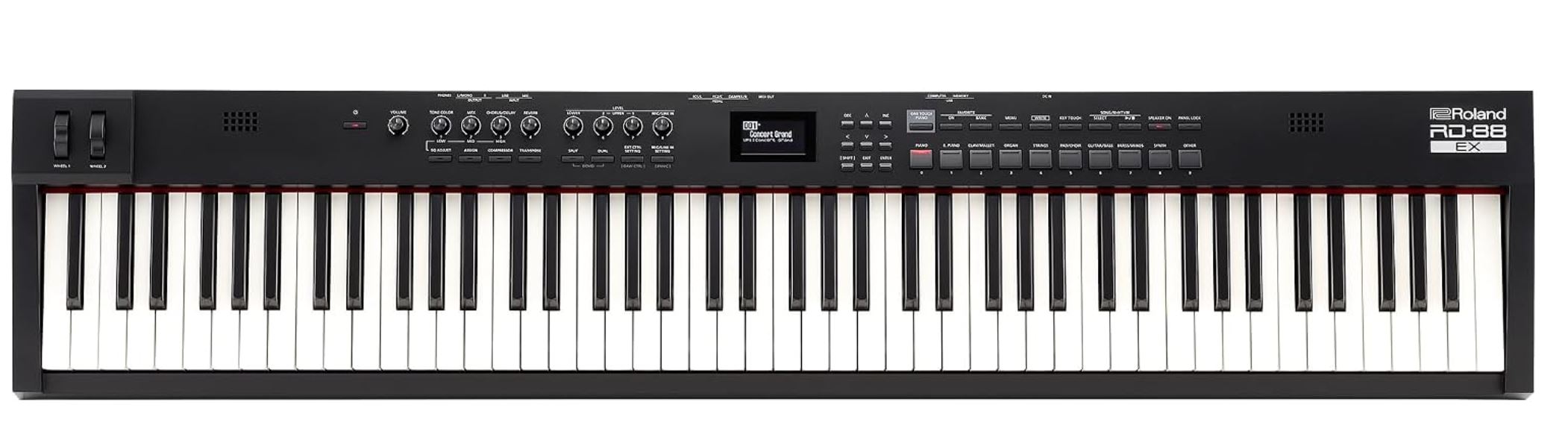
Around $1,430 · View on Amazon
If you ask worship musicians online what to buy, this is what comes back. The RD-88 line is the one that turns up on more small and mid-size church platforms than anything else, and the EX is the current version.
Why it earned that:
- Built-in stereo speakers on a stage piano, which is unusual and useful
- The ZEN-Core engine with over 3,000 onboard sounds, covering traditional and contemporary styles
- PHA-4 hammer-action keys, the same family Roland uses across its better instruments
- A DP-10 damper pedal included, which is a proper pedal rather than a footswitch
- Light for an 88-key instrument, which matters when it moves every week
Where it sits against the CK88: broadly similar money, broadly similar capability. The Roland has the deeper sound library and the stronger reputation in worship circles. The Yamaha has physical drawbars, which organ-heavy churches tend to prefer. Either is defensible; don't agonise.
5. Yamaha PSR-SX600 — If You Have No Band
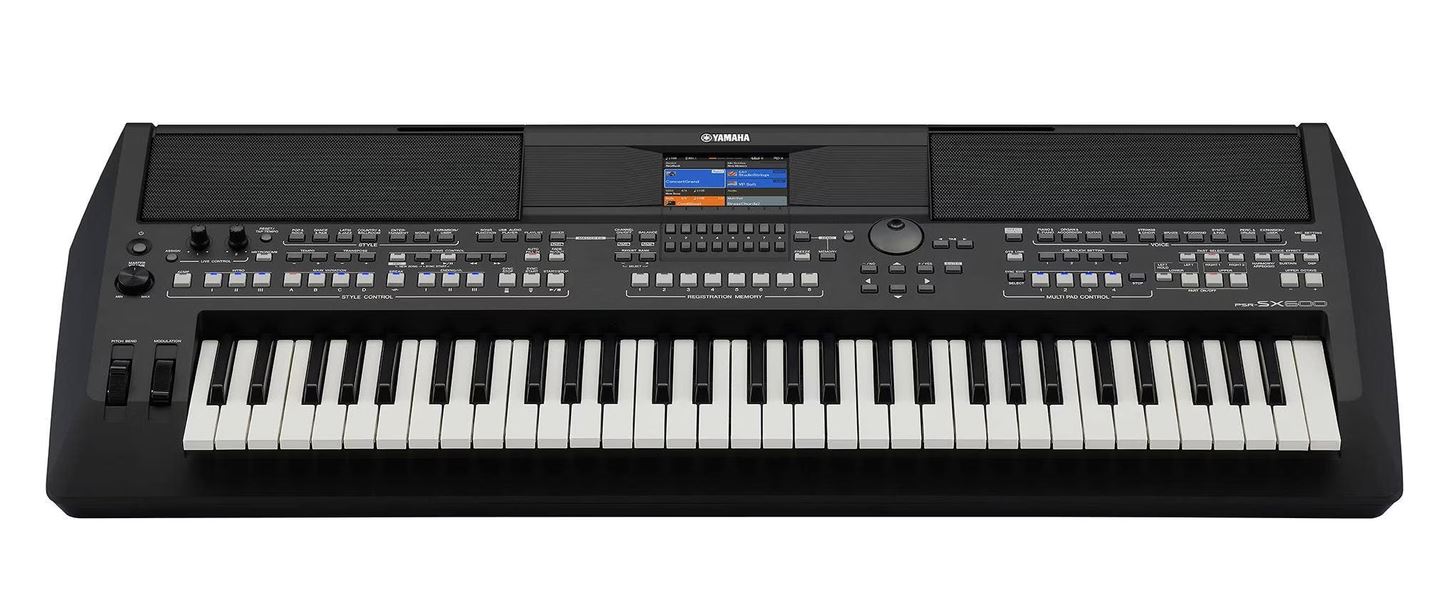
Around $900 to $1,100 · View on Amazon
A different kind of answer to a different problem.
If your music is one keyboard player and a congregation, with no drummer, no bass and no guitar, then an arranger keyboard is worth serious thought. Auto-accompaniment gives you rhythm and backing underneath whatever the player's hands are doing, which can turn a thin service into a full one.
What's genuinely useful here: 850 voices and 415 accompaniment styles, a transpose range of a full octave each way on the front panel, main line outputs, a microphone input with its own compressor and EQ, and built-in speakers. At 8.1 kg it's the lightest thing on this list by a distance.
That microphone input deserves a mention. For a church with no sound desk, it means the person leading can sing through the keyboard and out to the PA on one cable.
Be honest about the risk: done badly, this sounds like a wedding disco. Done well, with the styles chosen carefully and the drums kept quiet, it genuinely fills out a small room. It depends entirely on the taste of the person operating it.
Buy it if: you're covering everything with one instrument and nobody else is playing. Otherwise skip it and get a stage piano.
What About Nord?
You'll see Nord recommended everywhere for worship, and the reputation is earned. The Stage and Electro series have become the default on larger platforms because of the piano library, the tonewheel organ emulation and the immediacy of the interface.
They're also around $2,900 for an Electro 6D 73 and well north of five thousand for a Stage 4.
For a small church that's hard to justify, and it comes with a hidden problem: Nord's interface rewards a player who knows it well. Hand one to a rotating volunteer who plays once a month and the advantage evaporates.
One exception: if your church already has a committed, skilled keyboard player who'll be there for years, and the money exists, a used Nord Electro is a genuinely sensible buy. They hold value and last.
Setting It Up So It Survives
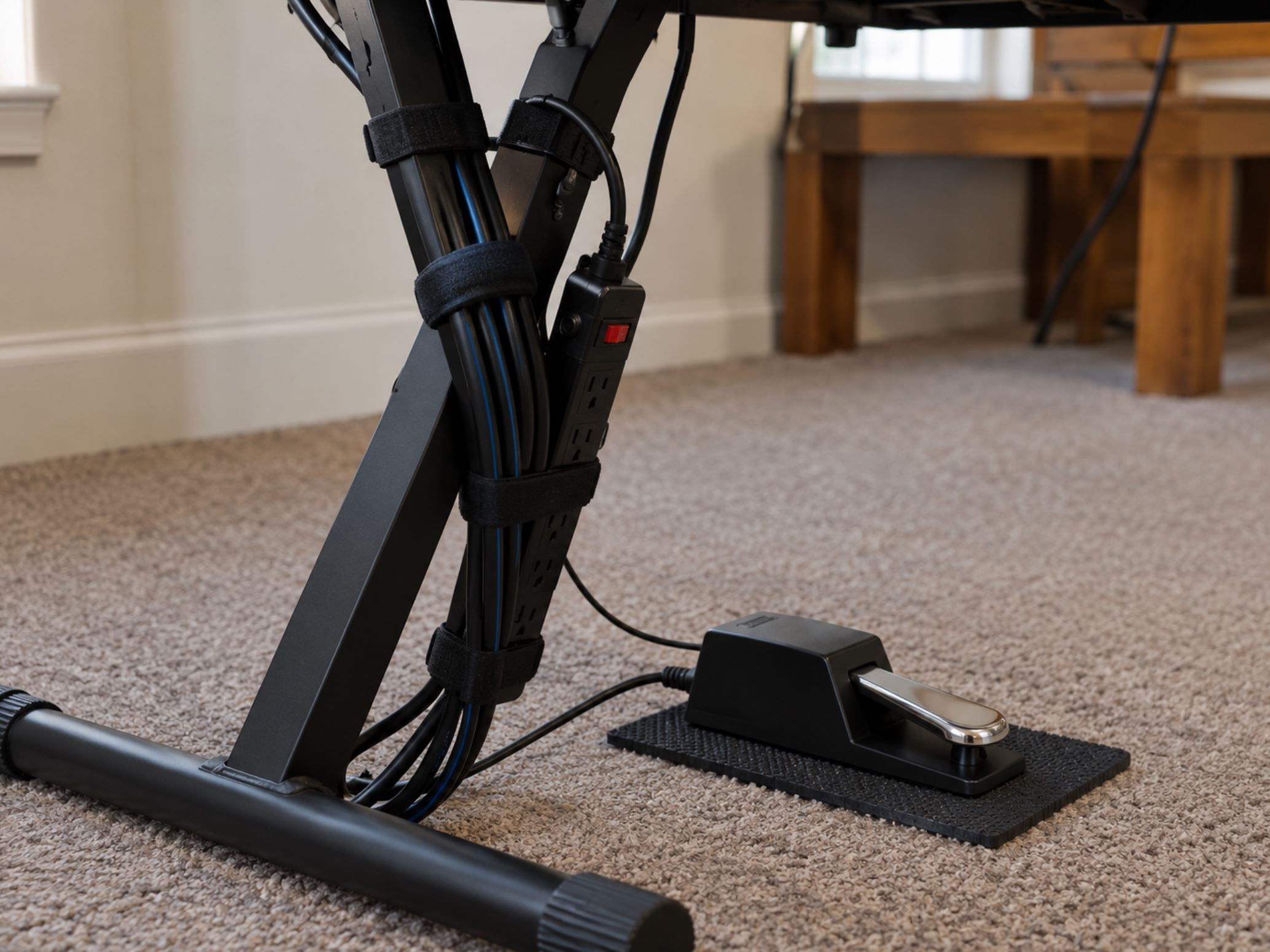
The instrument is maybe 70% of the decision. The rest is setup, and it's where most small churches lose sound quality for free.
Get a DI box or go straight to a line input. Running a quarter-inch cable 15 metres to the mixer picks up hum. A cheap DI box solves it and costs less than a music stand.
Tape down everything. Someone will trip over the cable. Make it so that when they do, the keyboard doesn't come with them.
Buy a sturdy stand, not an X-stand. A Z-frame or a two-tier table stand doesn't sway when someone plays hard, and it won't collapse when a child leans on it.
Get an adjustable bench, not a chair. Keys at elbow height when seated. A chair at the wrong height is where most of the hand position problems players develop actually start, and a volunteer playing for an hour on Sunday will feel it.
Put the sustain pedal on a rubber mat. Church carpet and sustain pedals are mortal enemies. The pedal slides forward, the player chases it, the piece suffers.
Write down the settings. Laminate a card with the three or four sounds you actually use and which button gets to them. Tape it to the stand. Your rota of volunteers will thank you, and nobody will play the whole service on honky-tonk again.
Label the volume knob position. A small piece of tape marking the normal level means the sound desk isn't guessing each week.
Our piano gift guide covers the pedal, bench and headphone side in more detail, and most of it applies here.
Common Questions
61 or 88 keys? 88 if your player is a trained pianist or you play a lot of hymns. 61 if the keyboard is mostly pads, organ and chords in a contemporary setting, or if one person has to carry it in and out every week. 76 is a reasonable compromise that very few people actually buy.
Do we need weighted keys? Need, no. But a classically trained accompanist will find unweighted keys genuinely harder to control dynamically, and in a church that's exactly the person you're trying to keep happy.
Should we buy used? Yes, and more churches should. Digital keyboards have very few parts that wear out. A two-year-old instrument at 60% of new price is usually the best value on the table, and it frees budget for a decent stand and cables.
We already have an acoustic piano. Do we need a keyboard at all? If the acoustic is in good shape and your music is traditional, maybe not. But check what condition it's actually in first, because a neglected church upright that hasn't been tuned in a decade may cost more to rescue than a digital costs to buy. Our piano maintenance guide covers what to look for and what the running costs really are.
What about just using an iPad with a MIDI controller? It works and it's cheap, and it is a terrible idea for a volunteer rota. Too many things to go wrong five minutes before a service: Bluetooth drops, an app update changes the interface, the iPad needs charging. Dedicated hardware boots in two seconds and does the same thing every week.
Our volunteer is still learning. Is that a problem? Not at all, and it's more common than you'd think. Pick an instrument with sounds on visible buttons and they'll be fine. If they want a sense of what progress looks like, how long it takes to learn piano sets honest expectations, and our tips for absolute beginners covers building a practice routine around a busy week.
How much should a small church budget in total? Roughly $800 to $1,800 for the keyboard, plus $200 to $350 for stand, bench, pedal, cables and a DI box. Budgeting for the keyboard alone and then discovering the extras is how churches end up with a good instrument on a wobbly stand.
Who should make the decision? Whoever plays it most. Not the treasurer, not the person who read the most reviews. Specs matter far less than whether the person at the keyboard can find the organ sound without panicking.
The Short Version
Under $700 and piano-led: Roland FP-30X. Around $1,000 and you want one instrument to cover everything: Yamaha CK61. Around $1,500 and your player is a real pianist: Yamaha CK88 or Roland RD-88 EX. No band at all: Yamaha PSR-SX600.
And whatever you buy, spend the extra on a solid stand and a DI box. A thousand-dollar keyboard through a bad cable on a wobbly stand sounds worse than a cheaper one set up properly.
Prices checked September 2026 and move frequently. Always confirm before buying.