The Best Keyboards for Grandparents and Older Beginners
Disclosure: some links below are affiliate links. If you buy through them we may earn a small commission at no extra cost to you. It doesn't affect which keyboards we recommend.
Most buying guides optimise for one thing: how closely the instrument imitates a concert grand. That's the right goal for a twenty-year-old heading toward grade 8.
It is often the wrong goal here.
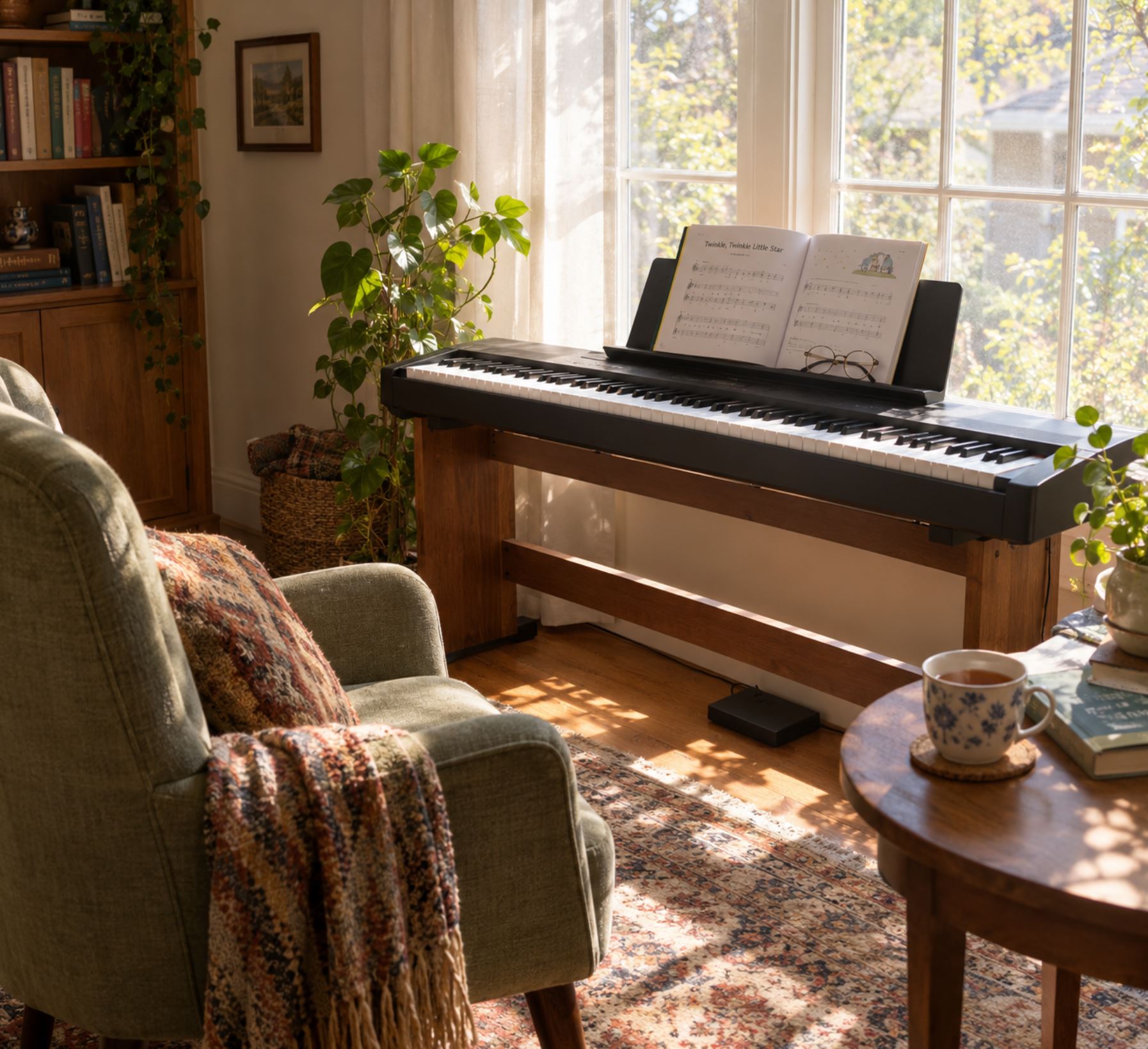
Buying for an older beginner — a parent, a grandparent, or yourself at seventy — involves a different set of trade-offs. Some of the most acclaimed instruments on the market are actively harder to live with, for reasons that never appear in a review.
Here's what actually matters, then the models that get it right.
First, the Encouraging Part
Before the practical stuff, because the folklore here is discouraging and wrong.
Researchers have run proper randomised trials on this. In one, musically inexperienced adults aged 60 to 85 were assigned either to six months of individualised piano instruction or to no training. The piano group significantly outperformed the controls on measures of executive function and working memory, and the gains were still measurable three months after the lessons stopped.
Six months. Complete beginners. Some of them in their eighties.
So the question of whether it's too late isn't really a question. We've covered the wider evidence in why adults can excel at piano, and the short version is that the constraint is calendar time, not capacity.
The Four Things That Actually Matter
1. Physical buttons you can see and feel.
This is the one that overturns the standard recommendations.
Several of the best-reviewed instruments at every price point use touch-sensor control panels — flat, unmarked surfaces that respond to a fingertip with no travel and no click. They look elegant. They are genuinely difficult for anyone with reduced sensation in the fingertips, and they give no tactile confirmation that anything happened.
Others, like the Roland FP-10, deliberately strip the front panel down to almost nothing and move the settings into a phone app. Excellent design decision for a 25-year-old. A real obstacle if the buyer doesn't want to manage an app to change the sound.
Look for: physical buttons with travel, labels large enough to read without glasses, and a display with decent contrast.
2. Key action, and the conventional advice may be backwards.
Every guide tells you to buy weighted keys, and for most people that's right — it's what we recommend in the best piano keyboards for beginners.
But weighted keys require more force per keystroke. For someone with arthritis, reduced grip strength or joint pain, that's a real physical cost, and it can be the difference between playing for forty minutes and stopping after ten.
Unweighted or semi-weighted keys press more easily. The trade-off is that they won't build acoustic-transferable technique, which matters a great deal if the goal is grade exams and very little if the goal is playing hymns and show tunes in the front room on a Tuesday.
Be honest about which goal applies. If hand comfort is a factor at all, a 61-key touch-sensitive board is a legitimate choice and not a compromise.
3. Weight, if it ever has to move.
12kg sounds light in a review and is not light if you're lifting it onto a stand alone. If the instrument will live in one spot forever, ignore this. If it gets put away between sessions or taken to a family gathering, it matters enormously.
4. Fewer features, not more.
A keyboard with 650 voices and 260 accompaniment styles has 650 ways to end up somewhere confusing. Someone who wants to play the piano needs one good piano sound and a way to get back to it when something changes.
The best feature on any instrument for this audience is a single button that resets everything.
1. Yamaha PSR-E383 — Best Overall
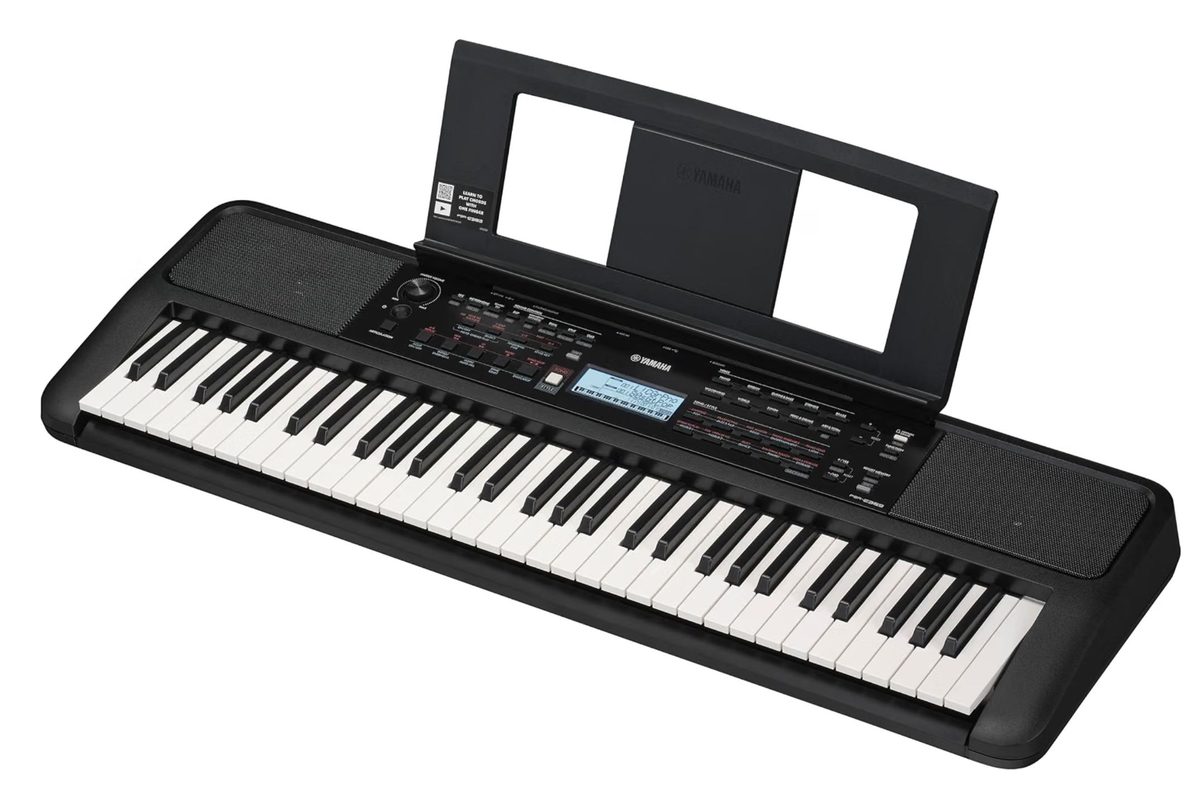
Around $200 · View on Amazon
Why it fits this brief better than anything more expensive:
- 61 touch-sensitive but unweighted keys — press harder for a louder note, without the force a weighted action demands
- A control panel of actual physical buttons with printed labels
- A clear display, not a cryptic two-character readout
- 125 built-in lesson songs and a lesson mode that teaches one hand at a time
- Duo mode, which splits the keyboard into two identical halves — ideal for sitting with a grandchild and playing the same notes
- Light enough to move without help
The honest trade-off: 61 keys, and unweighted ones. You'll run out of range eventually, and it won't prepare the hands for an acoustic piano. For a great many people in this situation, neither of those is the point.
Buy it if: this is about enjoyment rather than examinations, or if hand comfort is any part of the picture.
2. Casio Casiotone CT-S300 — Lightest and Simplest
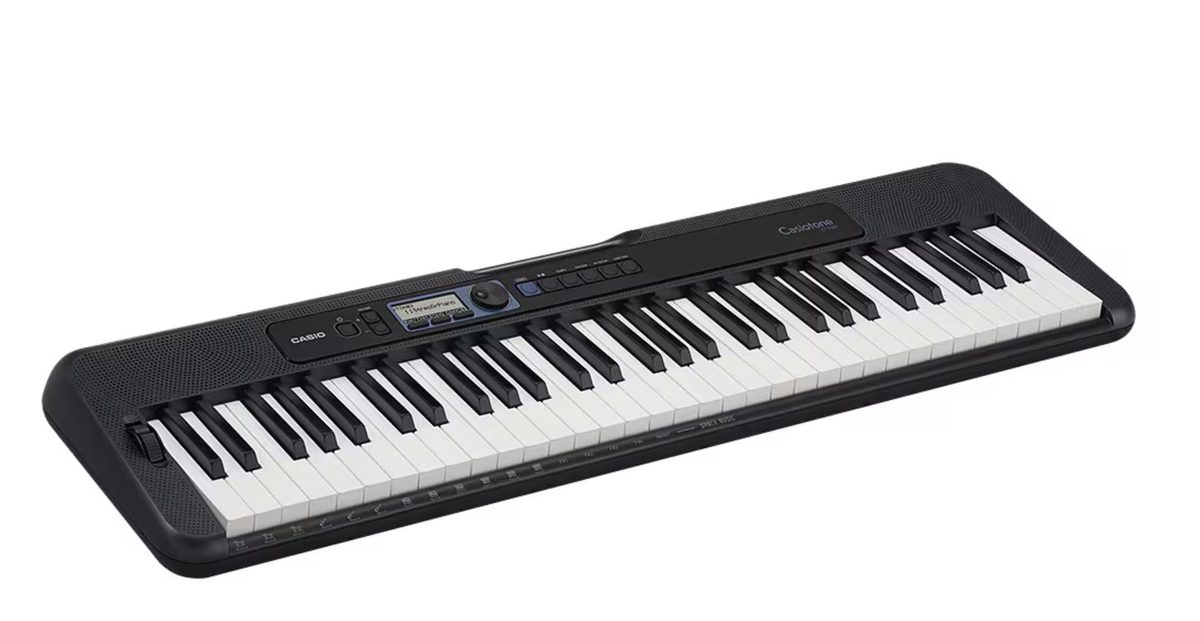
Around $220 to $260 · View on Amazon
At 3.3kg it's the lightest thing worth owning.
That number is the whole argument. Three and a bit kilograms, with a carrying handle built into the body, means it can be moved by anyone, put away in a cupboard, carried to another room, taken to a daughter's house at Christmas.
- 61 full-size touch-responsive keys
- Runs about 19 hours on six AA batteries, so it works in the garden or anywhere without a socket
- A "My Setup" button that recalls your preferred sound in one press — exactly the reset button I mentioned above
- Simple panel, no touch sensors
- Power supply and music rest included
The trade-off: small speakers and a light body, so the sound is thinner than larger instruments. Headphones solve it entirely.
Buy it if: portability, weight or storage is a real constraint.
3. Yamaha P-145 — If Weighted Keys Are Wanted
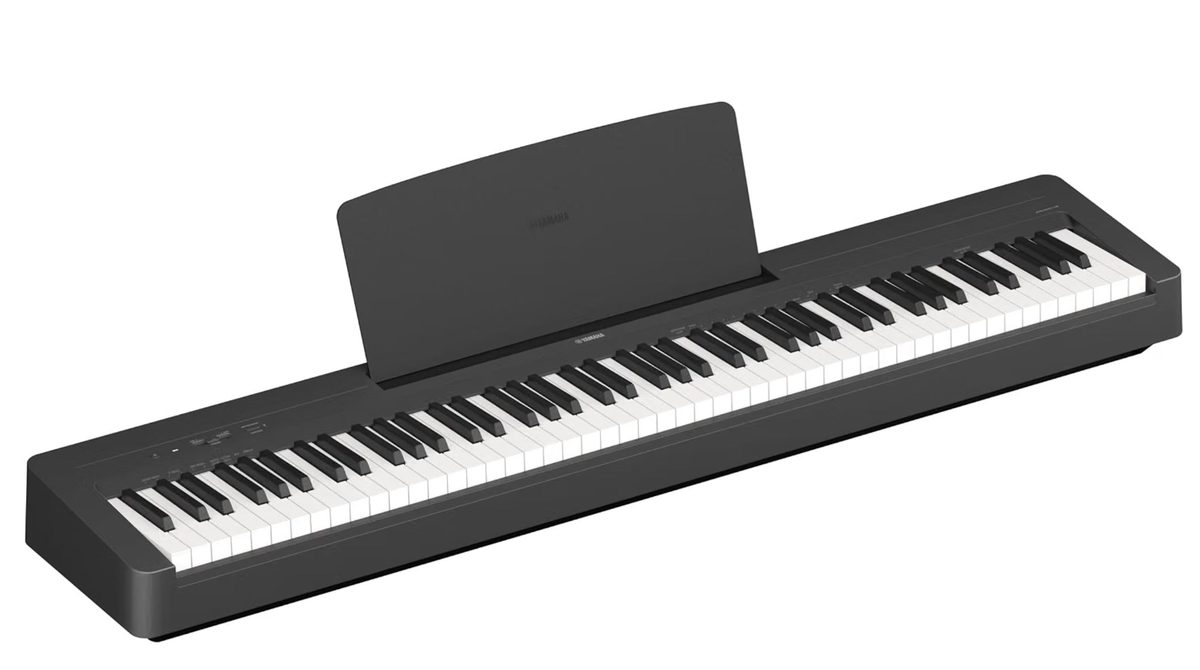
List $549.99, street around $470 · View on Amazon
For someone who played as a child and wants the real feel back, weighted keys are worth the extra force.
- 88 weighted GHC keys with a grand piano voice sampled from Yamaha's CFIIIS
- Only 10 voices, which here is an advantage rather than a limitation
- A simple front panel
- 11.1kg — heavy, but the lightest of the credible weighted options
- Smart Pianist app if someone in the family wants to set it up, ignorable if not
Why Yamaha specifically: the best service network in the category and the strongest resale value, both of which matter when the instrument may outlive its owner's interest in it.
Buy it if: there's previous playing experience and no hand-strength concerns.
4. Casio CDP-S160 — Weighted but Lighter and Cheaper
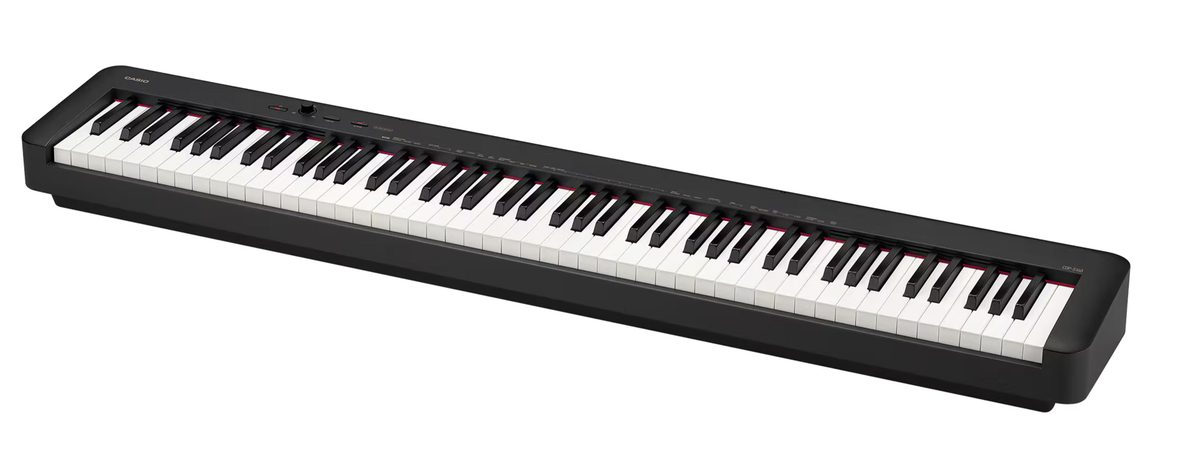
Around $400 to $450 · View on Amazon
Weighted 88 keys at 10.5kg, with a body only 232mm deep and an SP-3 sustain pedal in the box.
The depth matters more than it sounds — it means the instrument fits against a wall without dominating a room, and a slim profile is easier to get past with a walking frame or a stick.
It also runs on batteries for around 13 hours, which is unusual for a weighted instrument.
The trade-off: a lighter action than Yamaha's and a sound that's good rather than lovely. No Bluetooth, which here is one fewer thing to go wrong.
What to Avoid, and Why
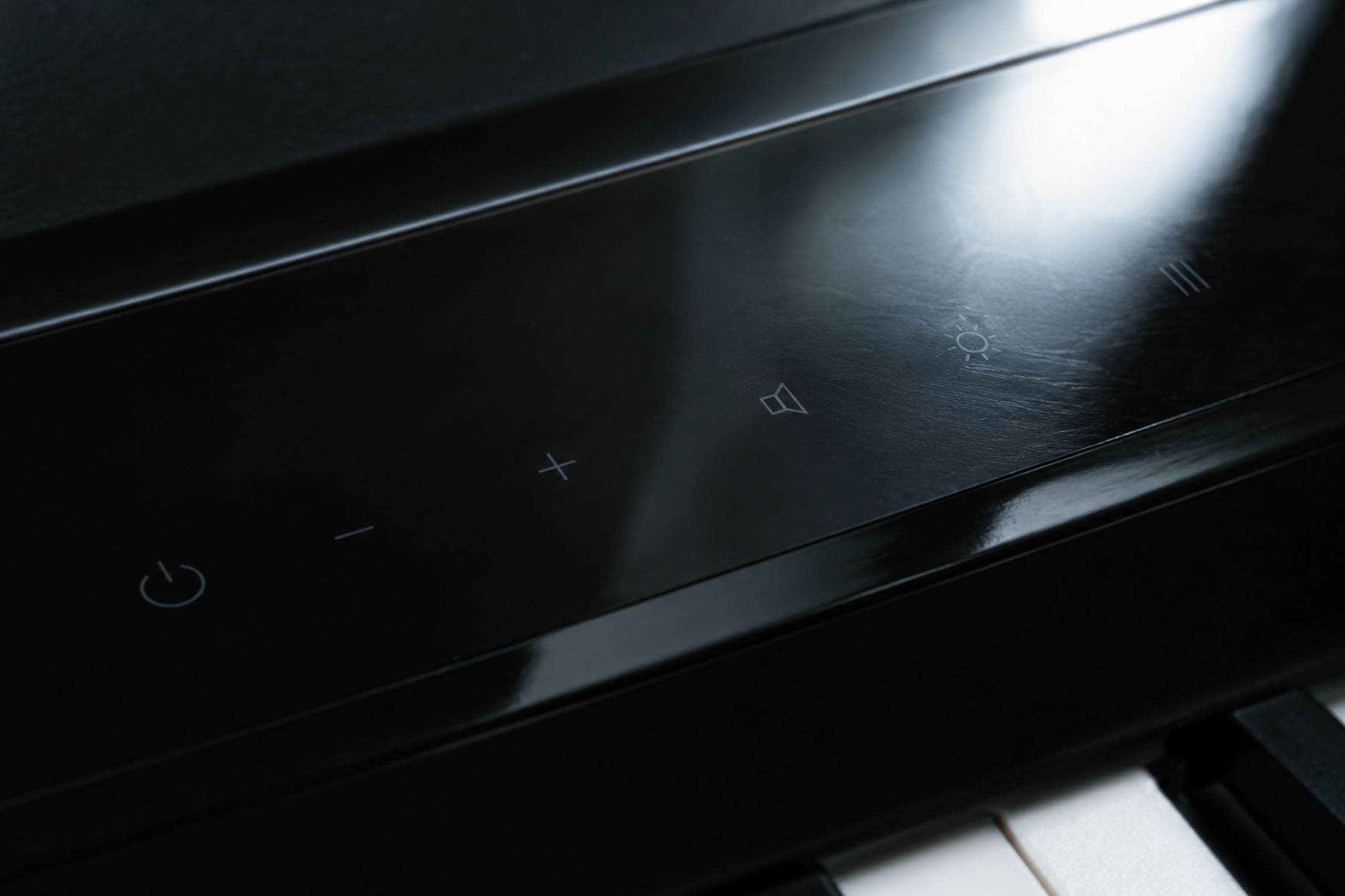
Touch-sensor control panels. The Casio P-XS1100 is a superb instrument and we recommend it elsewhere for its slim body. Its controls are flat touch sensors with no travel, which is a genuine usability problem for some older users. Worth knowing before you buy on a review.
Keyboards that move their settings into a phone app. The Roland FP-10 has the best key action under $500 and almost no front panel, because Roland expects you to use the Piano App. If that suits the person, fine. If it doesn't, it's the wrong instrument regardless of how good the keys are.
Giant feature sets. Arranger keyboards with hundreds of rhythms and auto-accompaniment can be wonderful, and they can also be a maze. Buy one deliberately, not by accident.
Light-up key systems. They teach you to follow lights rather than read music, and the habit is hard to shift later.
Anything with a two-character display. Changing a setting shouldn't require decoding an abbreviation.
Setting It Up So It Gets Used
This matters more here than the instrument does.
Put it where they already sit. An instrument in a spare room upstairs is an instrument that doesn't get played. In the living room, lid open, visible from the armchair — that's the one that gets touched in passing.
Get the seat right, and consider a dining chair over a bench. This is the one place I'd break the usual rule. A proper piano bench has no back, and for someone who needs back support, forty minutes on a backless bench is the limiting factor rather than their hands. A firm chair at the correct height with a supportive back is better than a correct-but-unusable bench. Height still matters: forearms roughly level, elbows around key height.
Headphones, and check the volume range. Essential for anyone in a flat or sharing a house. Also worth knowing that if the person wears hearing aids, over-ear headphones may not work well — in-ear or the instrument's own speakers at a comfortable level may be better. Test before committing.
A clip-on light. Older eyes need considerably more light to read music comfortably. A warm, dimmable clip light on the music stand costs around $30 and makes a real difference. It's in our gift guide along with the rest of the accessories.
Write down the settings. One laminated card taped to the stand: which button gets to the piano sound, how to adjust volume, how to turn it off. Nobody should have to remember a menu path.
Common Questions
Is it too late to start at 70? No. The research covers complete beginners up to 85, with measurable gains in six months. The constraint is practice time, not age.
Will arthritis make it impossible? It makes some choices better than others. Lighter unweighted keys need less force. Shorter, more frequent sessions beat long ones. If there's pain, stop and talk to a doctor or physiotherapist — this is one area where pushing through is the wrong instinct, and nothing in this guide is medical advice.
61 or 88 keys? 61, unless there's previous playing experience or a specific wish for weighted keys. 61 covers most of what a beginner plays, weighs less, costs less, and is less intimidating to sit down at.
Should I buy weighted keys anyway, to "do it properly"? Only if hands and wrists are comfortable with the extra force. An instrument that's uncomfortable after ten minutes is worse than a technically inferior one that gets played for an hour.
What about buying used? Good value, and digital pianos have few wearing parts. Test every key and the pedal jack. Our maintenance guide covers what to check if an acoustic piano is being considered instead.
How much should I budget in total? $200 to $500 for the instrument, plus around $100 to $150 for a stand, a seat, headphones and a light. Budgeting only for the keyboard is how people end up with a good instrument balanced on a dining table.
What should they learn first? Something recognisable, quickly. Our easy first songs is built for exactly this, and what to do in your first week is the plan that stops the instrument becoming furniture.
The Short Version
- Best overall: Yamaha PSR-E383, around $200 — physical buttons, light keys, proper lesson mode
- Lightest: Casio CT-S300, 3.3kg with a handle
- If weighted keys are wanted: Yamaha P-145 at around $470, or the Casio CDP-S160 at $400–450 for a lighter, slimmer option
- Avoid: touch-sensor panels, app-dependent instruments, and anything with 600 voices
And spend the leftover money on a decent light and a chair with a back. The instrument is maybe half the decision.
Prices checked October 2026 and move frequently. Always confirm before buying.