What to Do in Your First Week With a New Piano
The box is open. The thing is in your living room. And there is a specific feeling that follows, which is sitting down, pressing a few keys, and realising you have absolutely no idea what to do next.
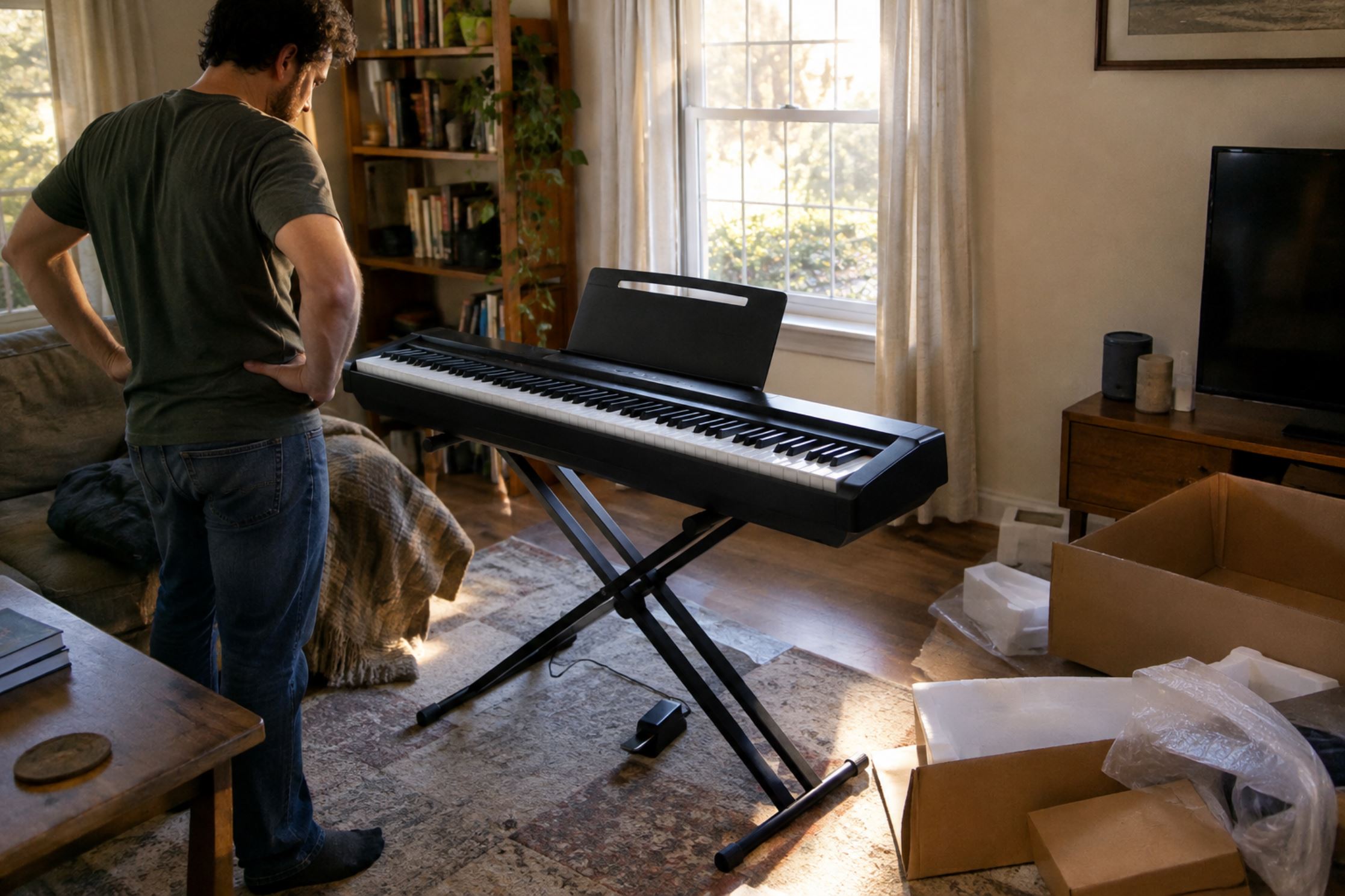
Most people spend that first evening noodling, then put the lid down and don't come back for four days. By week three the instrument has become a shelf for post.
This is the plan that prevents that. Seven days, twenty minutes or so each, and at the end of it you'll be able to play something recognisable with both hands and you'll have a habit that survives into week two. None of it is hard. The order matters more than the content.
Day 1: Set It Up Properly, Play One Note
Resist the urge to play for an hour. Spend the time on the setup instead.
This sounds like the boring answer and it's the one that pays off for years. The physical geometry of how you sit determines how your hands develop, and getting it wrong on day one means unlearning it in month eight.
The three measurements that matter:
- Bench height. Sitting down, your forearms should be roughly parallel to the floor, with your elbows at about the same height as the keys. Not higher, not lower.
- Distance. Far enough back that your elbows sit slightly in front of your body rather than jammed against your sides.
- Feet flat. If they dangle, you have no stability and you'll tense your shoulders to compensate.
If you're on a dining chair, it's almost certainly two inches too low and it has a back you'll end up leaning into. An adjustable bench is forty dollars and it's the single best thing you can add to a new piano. Our piano gift guide covers why this matters more than anything else you could buy.
Then plug in the pedal and the headphones. Both now, not later. The pedal because you'll want it sooner than you think, the headphones because the ability to play at 11pm is the thing that most determines whether you practise at all.
Finally, play one note. Find middle C and press it. That's enough for day one. The point of today was the chair.
Day 2: Learn the Keyboard's Geography
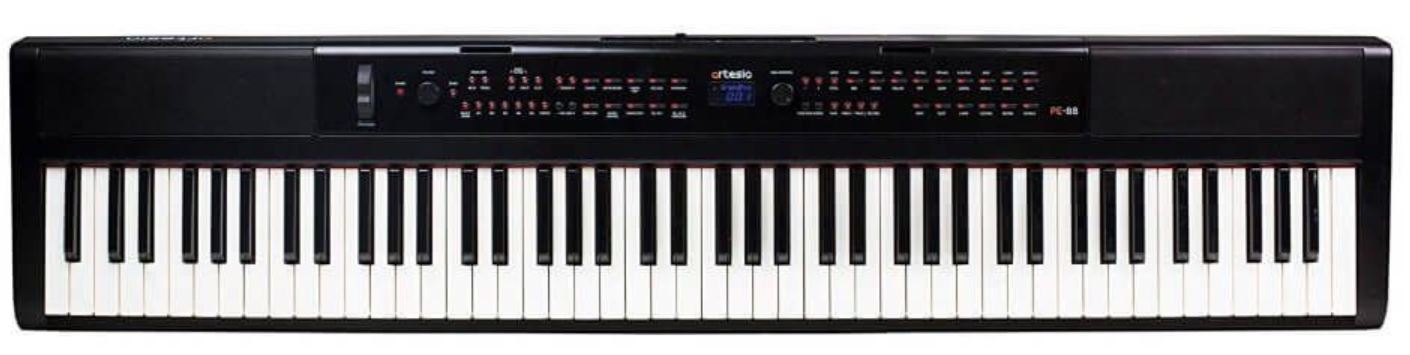
The keyboard looks like 88 identical things. It isn't. It's one pattern repeated seven times.
Look at the black keys. They come in groups of two, then three, then two, then three, all the way up. That pattern is the whole map, and once you see it you can never un-see it.
Find C without counting: C is always the white key immediately to the left of a group of two black keys. Every single time. There's a C in every group of twelve, and middle C is the one nearest the middle of the instrument, usually right around the brand name.
Today's whole task:
- Play every C on the instrument, low to high, using the two-black-key trick each time
- Do the same for F, which is always immediately left of a group of three black keys
- Say the note names out loud as you go
- Close your eyes and find middle C by feel
Fifteen minutes. This is the single highest-value thing you'll do all week, because every piece of music you ever learn depends on finding notes without hunting for them.
Do not put stickers on the keys. They feel helpful and they teach you to look down and read letters instead of looking up and reading music. Removing that habit later takes longer than learning it properly now, and it's one of the problems we cover in 10 common beginner mistakes.
Day 3: Get Your Hands Right
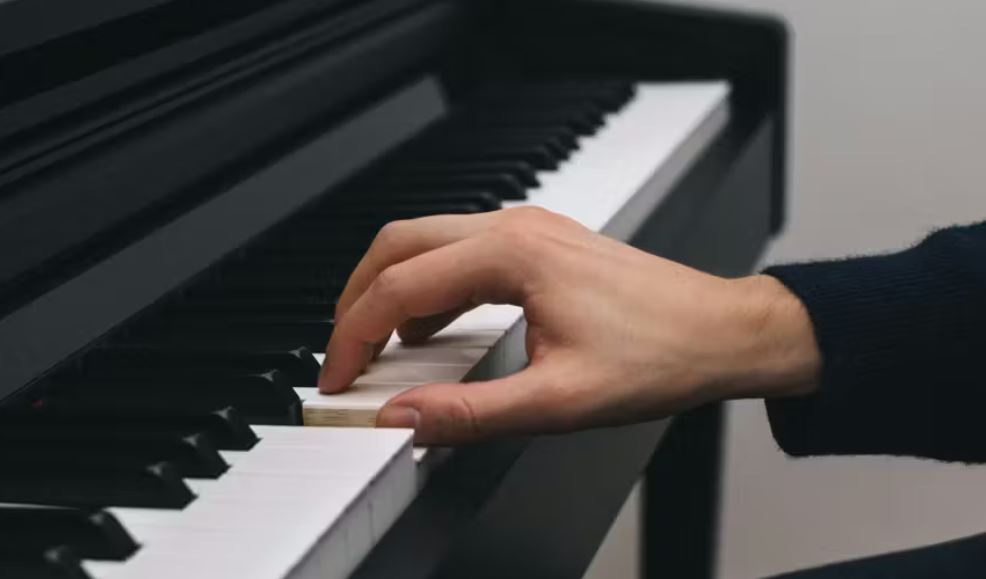
Twenty minutes today, and it's the other thing that compounds.
Let your arm hang loose at your side and look at your hand. It naturally curls into a soft curve. That curve is exactly what you want over the keys. Lift your hand to the keyboard without changing it.
What you're checking for:
- Fingertips on the keys, not the flat pads
- Knuckles slightly domed rather than caved in
- Wrist level with the forearm, neither arched up nor drooping
- Shoulders down, not creeping toward your ears
Then number your fingers. Thumb is 1, index 2, middle 3, ring 4, pinky 5, on both hands. Every piece of sheet music you ever read uses these numbers, and knowing them cold removes a whole layer of confusion later.
Practice drill: put your right thumb on middle C and let the other four fingers fall on D, E, F and G. Play each finger in turn, 1-2-3-4-5, then back down. Keep the other fingers resting on their keys. Aim for an even sound, not speed.
That hand shape is called C position, and it's the foundation of nearly everything you'll play in your first few months. Our full guide to the five essential hand positions goes into the rest, but C position is all you need this week.
Day 4: Play an Actual Song
Enough technique. Today you play music.
Ode to Joy, right hand only, in C position. You already have your hand in the right place from yesterday, and the melody moves almost entirely by step, so there are no jumps to worry about.
Using finger numbers, the opening is: 3 3 4 5 5 4 3 2 1 1 2 3 3 2 2.
That's it. Play it slowly. Play it again. Within twenty minutes most people have it.
Why this matters more than it looks: you now have a thing you can play for another human being. The single biggest predictor of whether someone is still playing in a year is whether the first fortnight was enjoyable, and "I played a real song in my first week" is a very different story from "I did finger exercises for a month."
Don't rush ahead to the hard bit. Stop at the end of the phrase, play it cleanly, and leave it there.
Day 5: Add the Left Hand
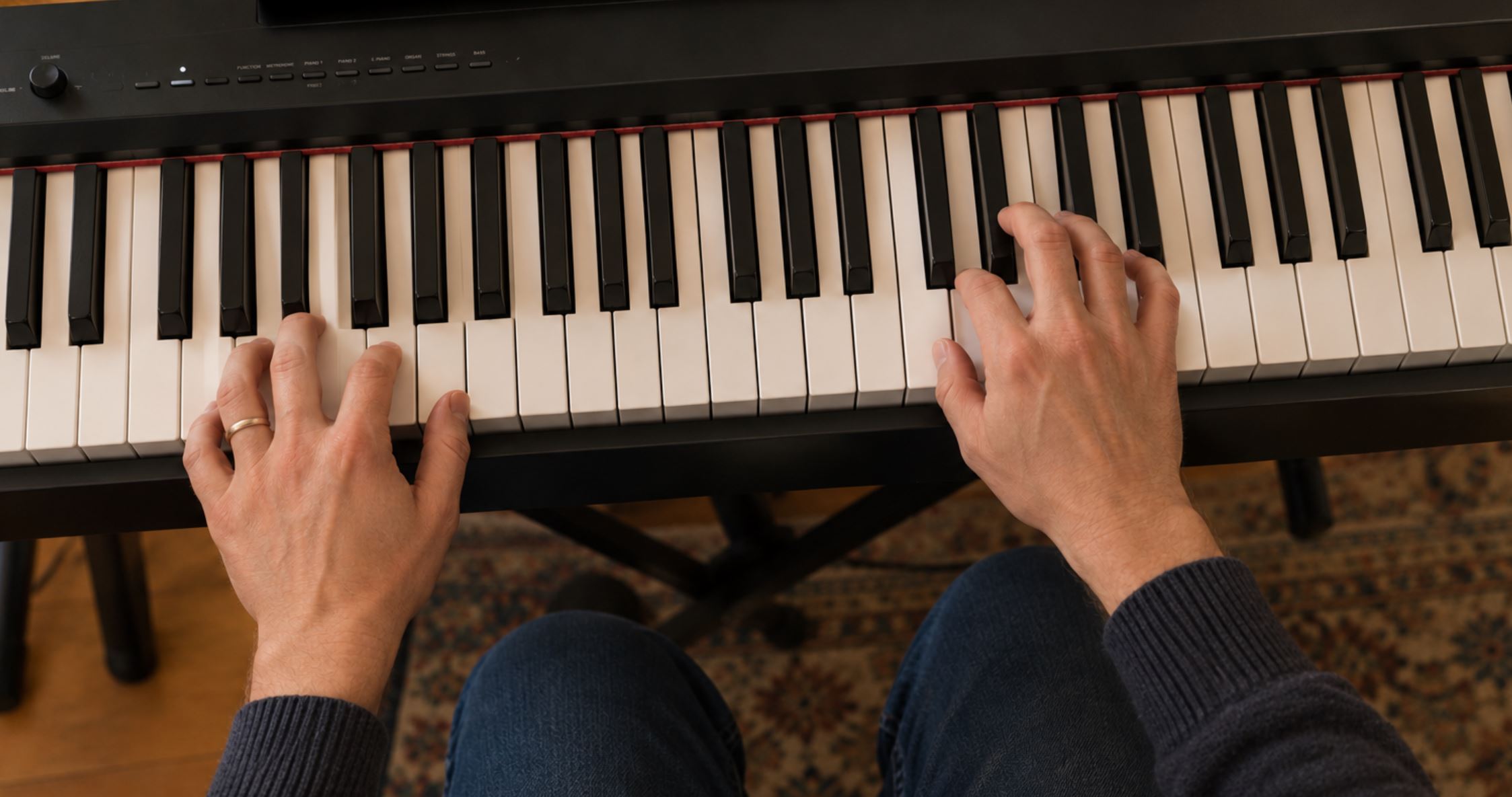
This is the hardest day of the week and it's deliberately placed here.
Play the Ode to Joy melody in your right hand. With your left hand, hold a single low C underneath it. Just one note, held down, for the whole phrase.
Your brain will object. The left hand will want to copy the right. You will feel uncoordinated in a way that seems personal and permanent.
It isn't. Everyone hits this, and it resolves suddenly rather than gradually — you'll fail at it for several sessions and then one evening it simply works. The people who quit piano mostly quit in this specific week, right before the thing they're waiting for arrives.
Make it easier:
- Play the left hand alone first until it's automatic
- Then the right hand alone
- Then together, at half the speed you think is reasonable
- If it falls apart, slow down further rather than trying harder
If today goes badly, that's the expected outcome. Come back tomorrow and it'll be marginally better. That's the whole mechanism.
Day 6: Build the Routine, Not the Skill
Today isn't about learning anything new. It's about deciding when you practise.
The thing that determines your progress over the next year is not talent and not your instrument. It's how many days a week you sit down. Fifteen focused minutes on six days beats ninety minutes on one, by a wide margin, because the consolidation that turns effort into skill happens between sessions rather than during them.
Pick a slot and attach it to something you already do. After dinner. Before the shower. The moment you get in from work. A time that floats gets skipped; a time attached to an existing habit doesn't.
Three things that keep it going:
- Leave the lid open and the music on the stand. Every extra step between walking past and playing a note is a step where you don't.
- Record yourself today. Phone, thirty seconds, play Ode to Joy badly. Date it and keep it. In three months this file will be the most motivating thing you own, because progress is invisible from the inside and obvious on playback.
- Set a stupidly low minimum. On the bad days, five minutes counts. The streak matters more than the session.
For a realistic sense of what's ahead, how long it takes to learn piano lays out the milestones month by month. Spoiler: month three is when it starts sounding like music.
Day 7: Decide How You're Going to Learn
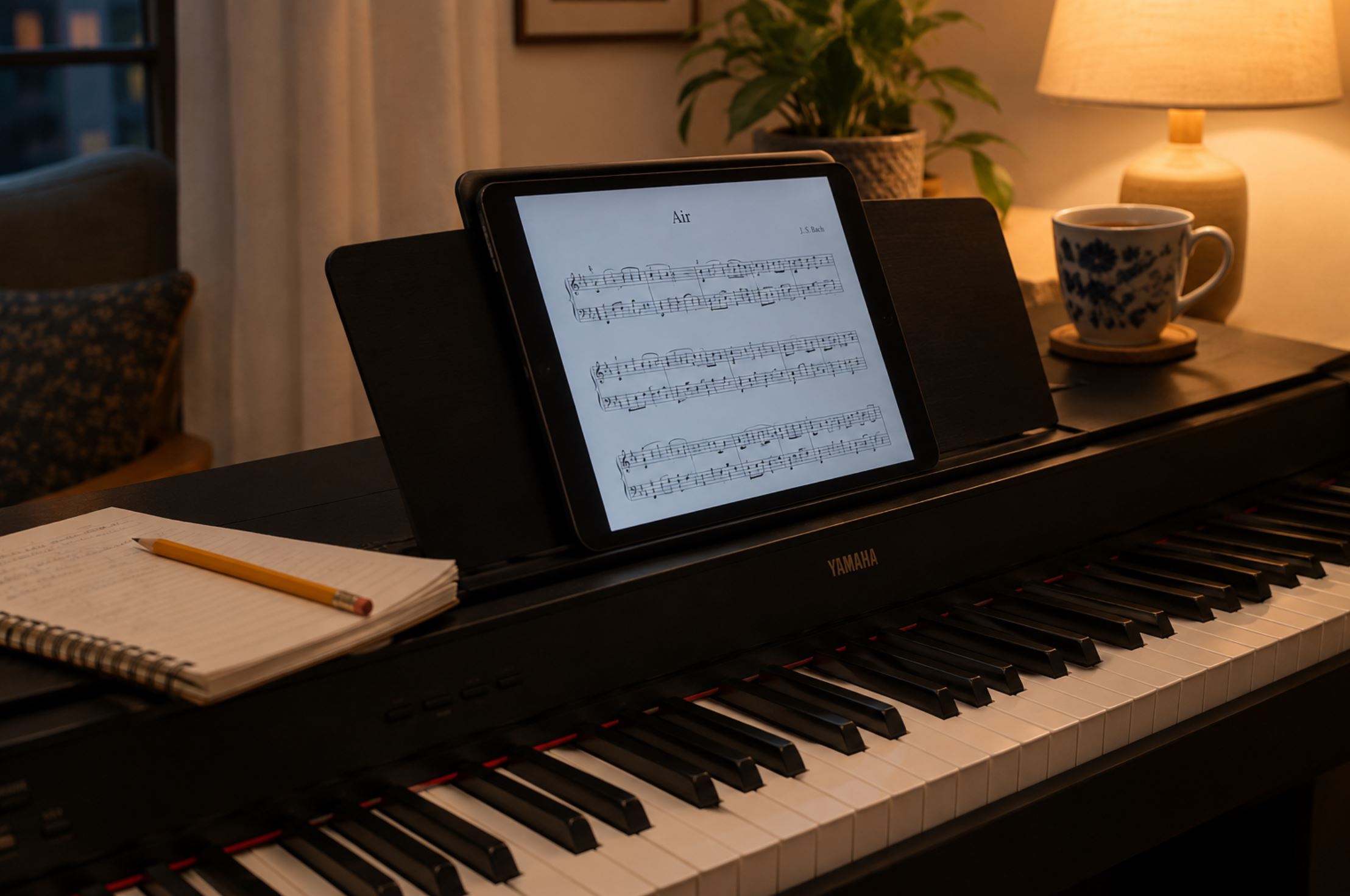
You've proved you'll sit down at it. Now choose the path.
Three realistic options, and there's no wrong answer, only a wrong fit.
A teacher. The fastest route by a distance. A teacher sees the tension, fingering and posture errors you physically cannot see yourself, and catching those early saves months. Even once a month helps. Most expensive, most effective.
An app. Great for motivation, daily streaks and getting you playing songs quickly. Weaker at building reading, which catches up with people around month eight. Our comparison of the main learning tools covers the options, and why you still can't read music after a year of piano apps explains the gap honestly so you can plan around it.
A method book plus video. Cheapest, slowest, works fine for self-disciplined people. Alfred's and Faber are the two standards.
Most people should do a hybrid: an app for the daily habit, a book for structure, and a handful of lessons in the first few months to catch bad habits before they set.
And pick your first real piece. Something you actually want to play, slightly above your current level, that'll take you a few weeks. The Office theme and Let Her Go are both reachable surprisingly early. River Flows in You is the one everyone wants and is genuinely harder than it looks, so bookmark it for month four rather than week two.
Things to Avoid in Week One
Practising until your hands hurt. Discomfort means something is wrong with your setup or your technique, not that you're working hard. Stop, check your wrist angle, and come back tomorrow.
Buying more gear. You need the instrument, a bench, a pedal and headphones. You do not need a second keyboard, a MIDI controller or a subscription to anything yet. If you're still shopping, the best piano keyboards for beginners covers it in one page.
Comparing yourself to people online. The internet is full of extraordinary playing by people who started in 1998. Compare yourself to your own recording from day six.
Starting with a piece that's far too hard. It's the most common reason beginners quit, and the damage is to your confidence rather than your hands.
Deciding you're "not musical" because day five went badly. Day five goes badly for everyone. That's why it's day five and not day one.
If You Bought an Acoustic Rather Than a Digital
Different first week. The playing advice is identical, but the instrument needs attention.
Get it tuned, even if the seller said it was done. Moving a piano knocks it out, and a new instrument in a new room needs to settle. Budget for a second tuning three to six months later.
Place it on an interior wall, away from radiators, direct sunlight and air vents. This decision is free, permanent, and almost always made on aesthetic grounds instead.
Buy a hygrometer. Fifteen dollars, and it tells you whether the room is going to slowly destroy the soundboard. Everything on upkeep is in our piano maintenance guide.
Common Questions
How long should I practise in week one? Fifteen to twenty-five minutes a day. Longer isn't better at this stage, and shorter sessions on more days beat the reverse. The habit is the goal this week, not the hours.
My hands feel uncoordinated. Is that normal? Completely. Hands-together coordination is the steepest wall in beginner piano and it arrives all at once rather than gradually. Almost everyone thinks they're uniquely bad at it. Almost nobody is.
Should I learn to read music from the start? Yes, alongside playing rather than before it. Waiting until you can "read properly" before touching a piece is how people never start. Ten minutes of reading practice a day, from week two onward, puts you years ahead of most self-taught players.
I'm an adult starting from scratch. Is this realistic? More than most people assume, and the research on adult learners is considerably more encouraging than the folklore. Why adults can excel at piano covers the evidence.
I bought this for my child. Does the plan change? Shorten everything. Five to ten minutes a day for under-sevens. And the framing matters more than the content at that age — how to get your kid to practise without the daily fight is the one to read.
What if I miss a day? Nothing happens. Miss four and the habit is at risk, which is why day six was about the slot rather than the skill.
The Week in One Line Each
Day 1 — Set the bench height. Play one note. Day 2 — Find every C and F using the black-key groups. Day 3 — Curved hands, numbered fingers, C position. Day 4 — Play Ode to Joy with your right hand. Day 5 — Add a single held note in the left hand. Expect this to go badly. Day 6 — Pick your practice slot. Record yourself. Day 7 — Choose a teacher, an app or a book. Pick your first real piece.
Seven days, maybe two and a half hours total, and you end it as someone who plays piano rather than someone who owns one.
Then do week two. That's genuinely the entire thing.
If you're still deciding on an instrument, our comparison tool puts the specs side by side, and practical advice for absolute beginners picks up where this post leaves off.