The Best Keyboards for Small Apartments (and How Not to Annoy Your Neighbours)
Disclosure: some links below are affiliate links. If you buy through them we may earn a small commission at no extra cost to you. It doesn't affect which keyboards we recommend.
Two things make a keyboard work in a small flat, and neither of them is on the spec sheet you're reading.
The first is depth, not width. Every 88-key instrument is roughly 1,330mm wide and there's nothing to be done about that. What varies enormously is how far it sticks out from the wall, and that's the number that decides whether you can still walk past it.
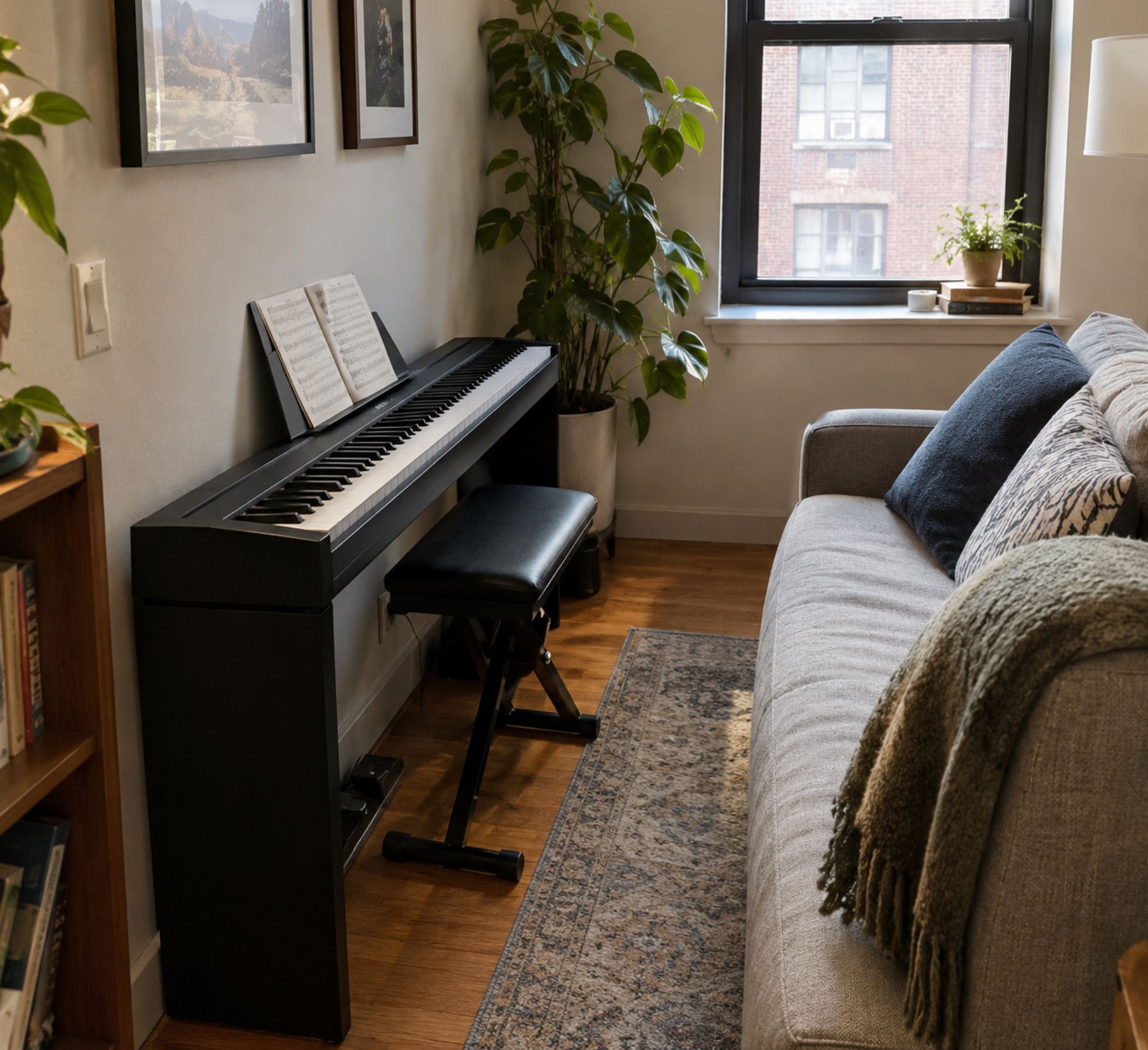
The second is structure-borne noise, which is the thing nobody tells you about until your downstairs neighbour knocks. Headphones silence the speakers. They do nothing about the mechanical clatter of 88 weighted keys hitting their beds, or the thump of a sustain pedal, both of which travel straight through the floor.
So this guide is organised by footprint, with a section at the end on the noise problem, which is the part that actually determines whether you keep the instrument.
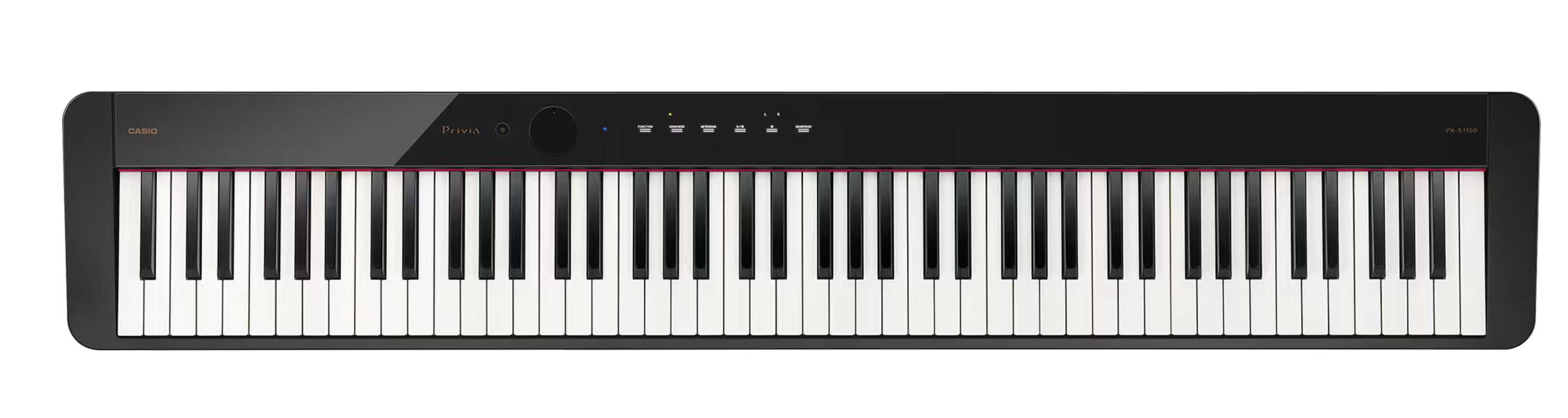
1. Casio PX-S1100 — The Slimmest 88 Keys You Can Buy
Around $650 to $750 · View on Amazon
Depth: 232mm
This is the answer to the question. Casio's Privia S-series is built around a redesigned hammer mechanism that let them get the body down to roughly the depth of a laptop, and it's genuinely the slimmest weighted 88-key instrument on the market.
To put 232mm in perspective: a standard IKEA Billy bookcase is 280mm deep. The PX-S1100 sticks out less than your bookshelf does.
Why it suits a flat specifically:
- Slim enough to sit against a wall in a hallway or behind a sofa
- Touch-sensor controls instead of physical buttons, so the panel is flat
- Runs on six AA batteries, which means no cable run across the room
- Bluetooth audio, so you can play along with music from your phone without another box
- Quarter-inch outputs if you ever want to record properly
The trade-offs: the touch controls are divisive — some people find them fiddly in low light. And it's light enough at around 11kg that a flimsy stand will wobble, so don't pair it with the cheapest X-frame you can find.
Buy it if: space is genuinely your binding constraint and you want weighted keys anyway.
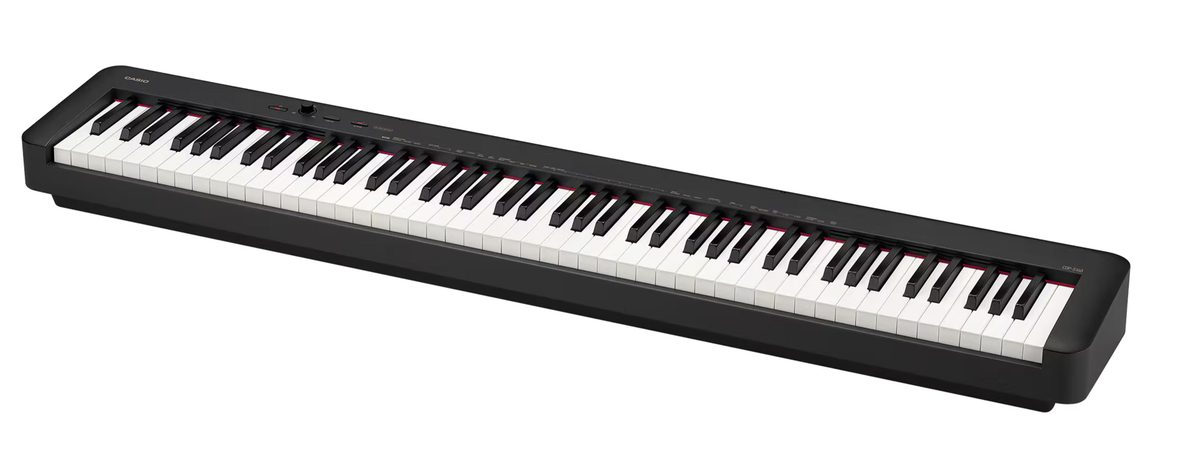
2. Casio CDP-S160 — Slim, Cheaper, Runs on Batteries
Around $400 to $450 · View on Amazon
Depth: 232mm · Weight: 10.5kg
Same slim chassis as the Privia at a meaningfully lower price. Scaled Hammer Action Keyboard II, 10 tones, 16W speakers, and the SP-3 sustain pedal is in the box rather than an extra purchase.
The headline feature for flat-dwellers: roughly 13 hours on six AA batteries. That sounds like a camping gimmick until you realise what it actually means — you can play anywhere in the flat without planning around a socket, and you can put it away entirely between sessions.
What you give up versus the PX-S1100: no Bluetooth, a slightly less refined piano sound, and a lighter action that some players find plasticky.
Buy it if: you want the slim footprint without the Privia price, and you don't need Bluetooth.
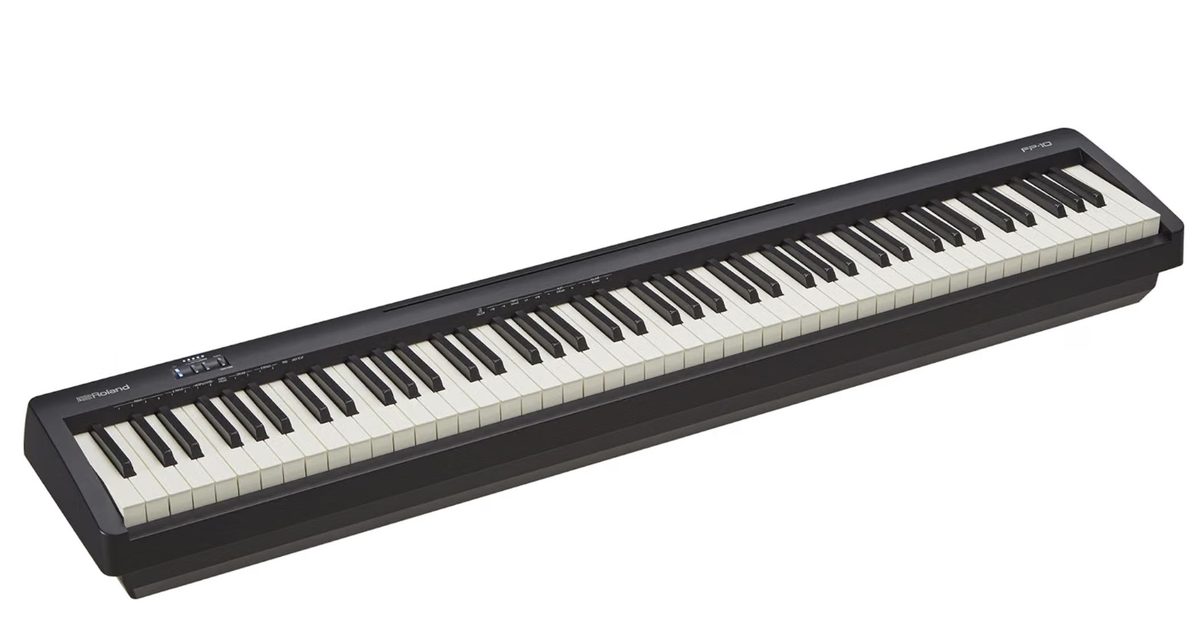
3. Roland FP-10 — Smallest Footprint With the Best Action
Around $450 to $500 · View on Amazon
Depth: 258mm · Width: 1,284mm
Slightly deeper than the Casios but the narrowest 88-key instrument in its class, and it has the best keybed at this price by a comfortable margin — Roland's PHA-4 Standard with escapement and ivory-feel surfaces, the same action they put in considerably more expensive pianos.
The apartment-specific argument: 1,284mm wide is around 50mm narrower than most rivals, which sounds trivial until you're fitting something into an alcove. And the control panel is deliberately sparse, with most settings living in a phone app, so there's no deep panel adding to the footprint.
The honest caveat: no battery option, and Bluetooth MIDI only, so no streaming backing tracks to its speakers. The speakers are modest too, though in a flat you'll be on headphones most of the time anyway.
Buy it if: you want the action to be good first and the footprint small second. Full comparison against its rivals in the 3 best digital pianos under $500.
4. Yamaha P-145 — The Safe Choice That Still Fits
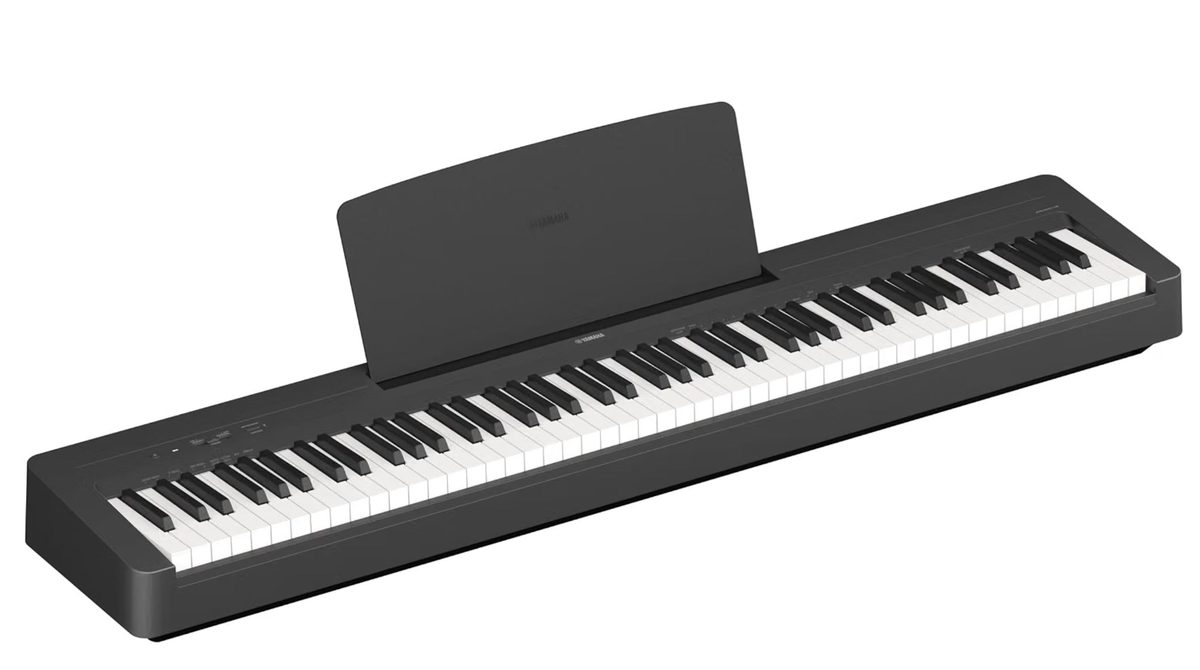
List $549.99, street around $470 · View on Amazon
Depth: 268mm · Weight: 11.1kg
Yamaha redesigned the P-series around a new compact action (GHC) specifically to shrink the body, and the P-145 is the result — noticeably slimmer than the P-45 it replaced, which was 295mm deep.
It's the deepest instrument on this list, but only by about 35mm against the Casios, and you get Yamaha's service network, the strongest resale value in the category, and the Smart Pianist app. The BT version adds Bluetooth audio.
Buy it if: 268mm fits and you'd rather have the brand that'll still be servicing it in a decade. Our beginner buying guide covers how it stacks up more broadly.
5. Casio CT-S300 — When 88 Keys Simply Won't Fit
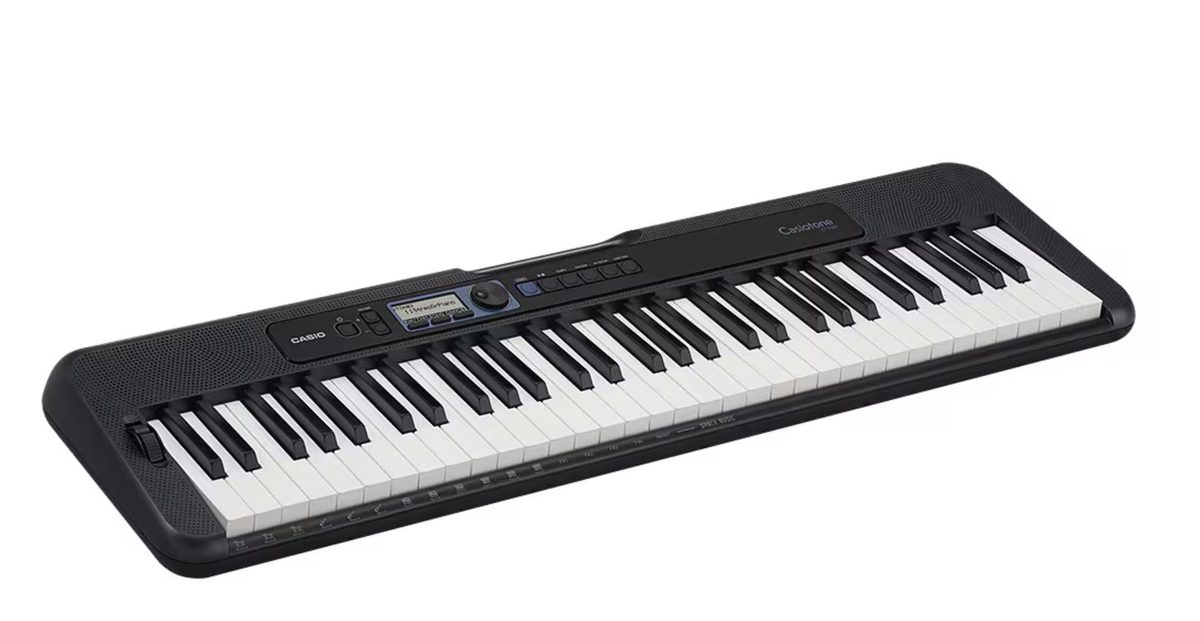
Around $220 to $260 · View on Amazon
61 keys · 3.3kg · Built-in handle
Sometimes the honest answer is that a full-size piano doesn't fit, and pretending otherwise means buying something that lives in a corner unplayed.
The CT-S300 has 61 touch-responsive keys, runs about 19 hours on six AA batteries, weighs 3.3kg, and has a carrying handle moulded into the body. It fits on a desk, a shelf, or in a wardrobe between practice sessions.
What you're accepting: unweighted keys, and you'll run out of range within a year or so. That's a real cost and I wouldn't minimise it.
But the competing cost is worse. A keyboard that lives in a cupboard and comes out occasionally beats an 88-key instrument you can't fit and therefore didn't buy. Touch sensitivity is the line that matters at this price, and this has it, which is the thing that separates an instrument from a toy. More on that in the best keyboards under $300.
The Noise Problem Nobody Warns You About
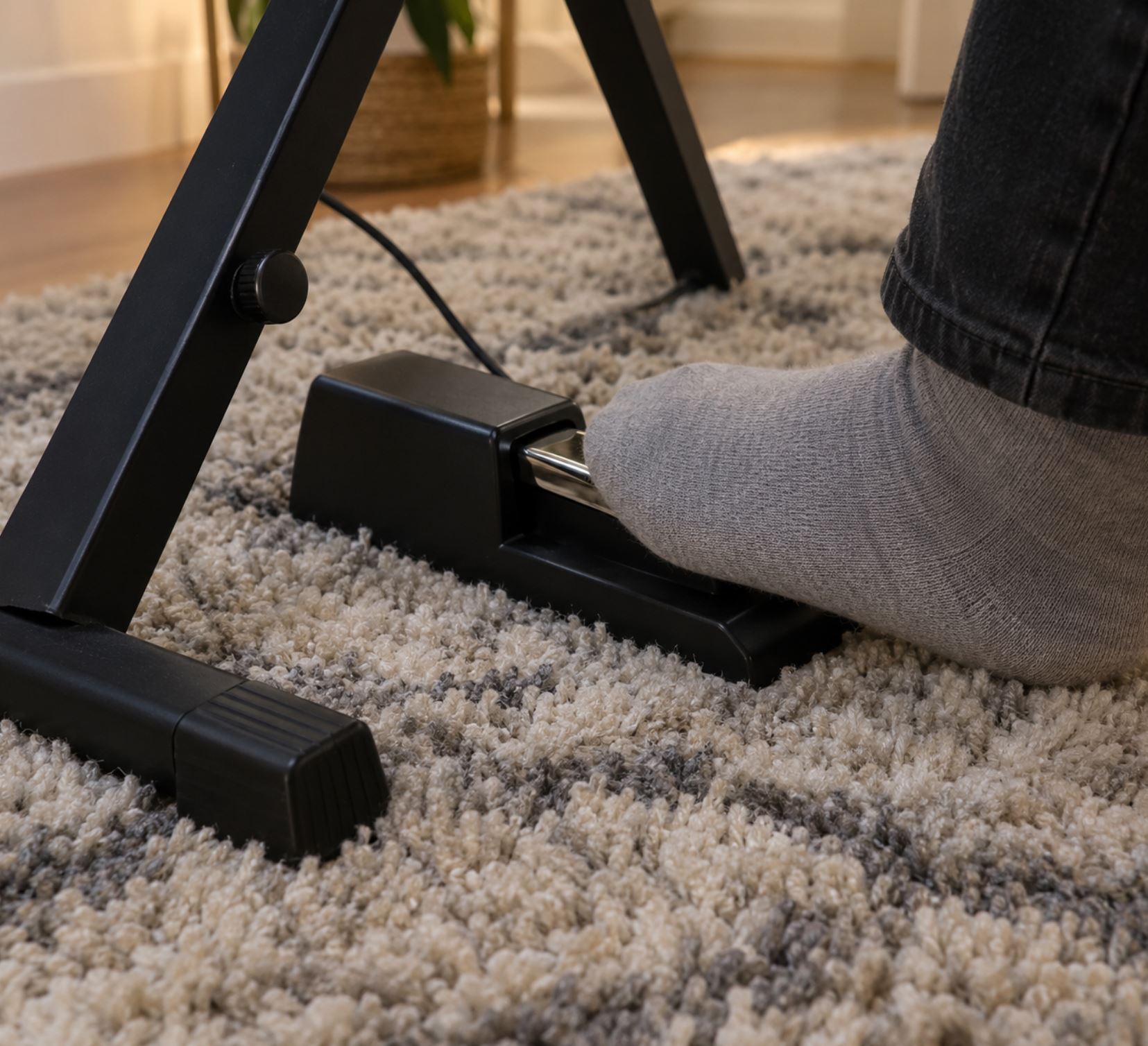
Here is the thing that catches people out. You buy a digital piano specifically so you can practise silently in a flat. You put headphones on. And six weeks later your downstairs neighbour mentions the thumping.
Headphones silence the speakers and nothing else. A weighted keyboard contains 88 hammer mechanisms, and every one of them makes a mechanical click when it hits bottom and another when it returns. Play a fast passage and that's a continuous clatter. It's quiet in the room and it travels well through a floor.
The sustain pedal is worse. Every press is a small impact transmitted directly into the floor through the pedal's own weight, and pedalling is rhythmic, which makes it far more noticeable than random noise.
What actually helps, roughly in order of effectiveness:
- A thick rug under the whole setup, stand and pedal both. The single biggest improvement for the least money.
- A dense foam or rubber mat under the pedal specifically. Yoga mat offcuts work. This also stops the pedal sliding, which is a separate irritation.
- Isolation pads under the stand legs. The rubber feet sold for washing machines do the job for a few dollars.
- Avoid the wall you share. Place the instrument against an internal wall where you can, same as you would an acoustic.
- Play with a lighter touch during antisocial hours. You can't eliminate key noise but you can halve it.
And the obvious one people skip: actually talk to your neighbours before there's a problem. "I've just got a piano, I'll always use headphones, tell me if you hear anything" costs nothing and converts a future complaint into a conversation.
If the flat is genuinely tiny or the walls genuinely thin, a 61-key unweighted board like the CT-S300 is dramatically quieter than any hammer-action instrument. Spring-loaded keys have no mechanism to clatter. That's a real argument for the compromise beyond just size.
Getting the Setup Right in a Small Space
Skip the X-stand if you can. They're wide at floor level, they wobble, and they take up more usable space than their footprint suggests. A Z-frame or a slim table stand sits tighter against the wall.
Wall-mounted options exist and almost nobody considers them. A sturdy shelf bracket at the right height turns a slim instrument into something close to furniture, and frees the floor entirely.
Use the top as a surface, carefully. On a slim instrument there isn't room for much, but a lamp and a tablet fit. Never a drink.
Get decent closed-back headphones. You'll be in them most of the time, so this isn't a place to economise. The pair we recommend in the piano gift guide is the standard answer.
And get the bench height right anyway. Small space is not an excuse for a dining chair — that's where most hand position problems begin. A folding adjustable bench stores flat against a wall.
Common Questions
What's the actual minimum space I need? Roughly 1,400mm of wall and 700mm of floor depth, which allows for the instrument plus a bench plus room to sit. The instrument itself is only a third of that.
Can I keep it under the bed between sessions? A 61-key board, yes. An 88-key one technically fits under many beds but you won't do it twice, and a keyboard that takes five minutes to set up is a keyboard you stop setting up. Leave it out if you possibly can — accessibility is the strongest predictor of whether you practise.
Will my neighbours hear me through headphones? Quietly, yes, through the floor rather than the walls. A rug and a pedal mat fix most of it. The people who get complaints are usually the ones with a hard floor and a hammer-action instrument.
Is a slim piano worse than a normal one? Not inherently. The Casio S-series achieves its depth through a redesigned action rather than by cutting corners. What you lose is speaker size, since there's less cabinet volume, which matters less when you're on headphones anyway.
61 or 88 keys for a flat? 88 if it fits, because you'll outgrow 61. But "fits" means fits comfortably, including the bench and room to get past. If you have to shuffle sideways past it every day, you'll resent it by March.
How long before I outgrow a 61-key board? Usually around a year. Most beginner repertoire fits, but you'll start running out on anything with a wide left hand. How long it takes to learn piano sets out what you'll be playing by then.
The Short Version
- Slimmest with weighted keys: Casio PX-S1100, 232mm.
- Same footprint, less money: Casio CDP-S160, 232mm, runs on batteries.
- Best action, narrowest body: Roland FP-10, 258mm.
- Safest long-term buy that still fits: Yamaha P-145, 268mm.
- When 88 keys genuinely won't fit: Casio CT-S300, 61 keys, 3.3kg, handle included.
And buy a rug. Whatever you spend on the instrument, the rug is what keeps the peace.
Once it arrives, what to do in your first week with a new piano is the plan that stops it becoming furniture.
Prices checked October 2026 and move frequently. Always confirm before buying.